The $200,000 phone call: where AI agents finally meet the physical economy
Software took over the cheap retail trade years ago, but high-value industrial procurement still runs on twelve phone calls and a quote. Vertical AI buyer agents are the first credible attempt to bring that $5K-$1M market online, and the playbook for the SMB operator is closer than the headlines suggest.
The line everyone draws at the wrong place
Ask a room of AI founders where the agents are working today and you will get the same list every time. Code. Email. Calendar. Customer support tickets. Browser research. It is a list dominated by desk work, and it has been a list dominated by desk work since the first wave of agent demos in 2024.
The interesting gap is not on that list. The interesting gap is what is not on it. According to a widely-shared note this week, the largest untouched opportunity for AI agents is not another developer surface or another inbox. It is the phone call between a procurement manager at a construction company and a parts shop, closing a $200,000 order for a hydraulic crane component. That call, and the eleven other calls that came before it, is exactly the kind of work AI was supposed to automate, and it is still happening in 2026 with almost no software in the loop.
The reason is not technical. The reason is that the physical economy does not move online. A buyer cannot add a custom-spec industrial bearing to a shopping cart and check out with a credit card. The seller cannot publish a SKU and call it done. Both sides need a conversation, and the conversation is where the value is captured.
Why the high-value market never went digital
Commerce has been moving online for thirty years. Books, clothing, electronics, and a long tail of low-friction retail categories were the easy wins. Anything in the $5,000 to $1,000,000 range moved much more slowly, because the friction in those transactions is not a checkout button. It is the conversation that determines whether the part fits the spec, whether the lead time works, whether the warranty terms hold for the buyer's application, whether the buyer's procurement policy allows this vendor, and whether the price is negotiable.
Each of those is a question that a knowledgeable person on the other end of the line is currently expected to answer. Replacing that person with a static form costs the seller deals. Replacing them with a generic chatbot costs the seller trust. The market has accepted that cost because the alternative is to lose the sale entirely.
The volume sitting behind that trade is not small. Industrial roofing contracts, hydraulic crane parts, commercial HVAC components, marine engine rebuilds, custom fabrication orders. Each is a four-to-seven-figure order book in the United States alone, and almost none of it is captured by a software system on either side of the trade.
What changes when an AI buyer agent enters the call
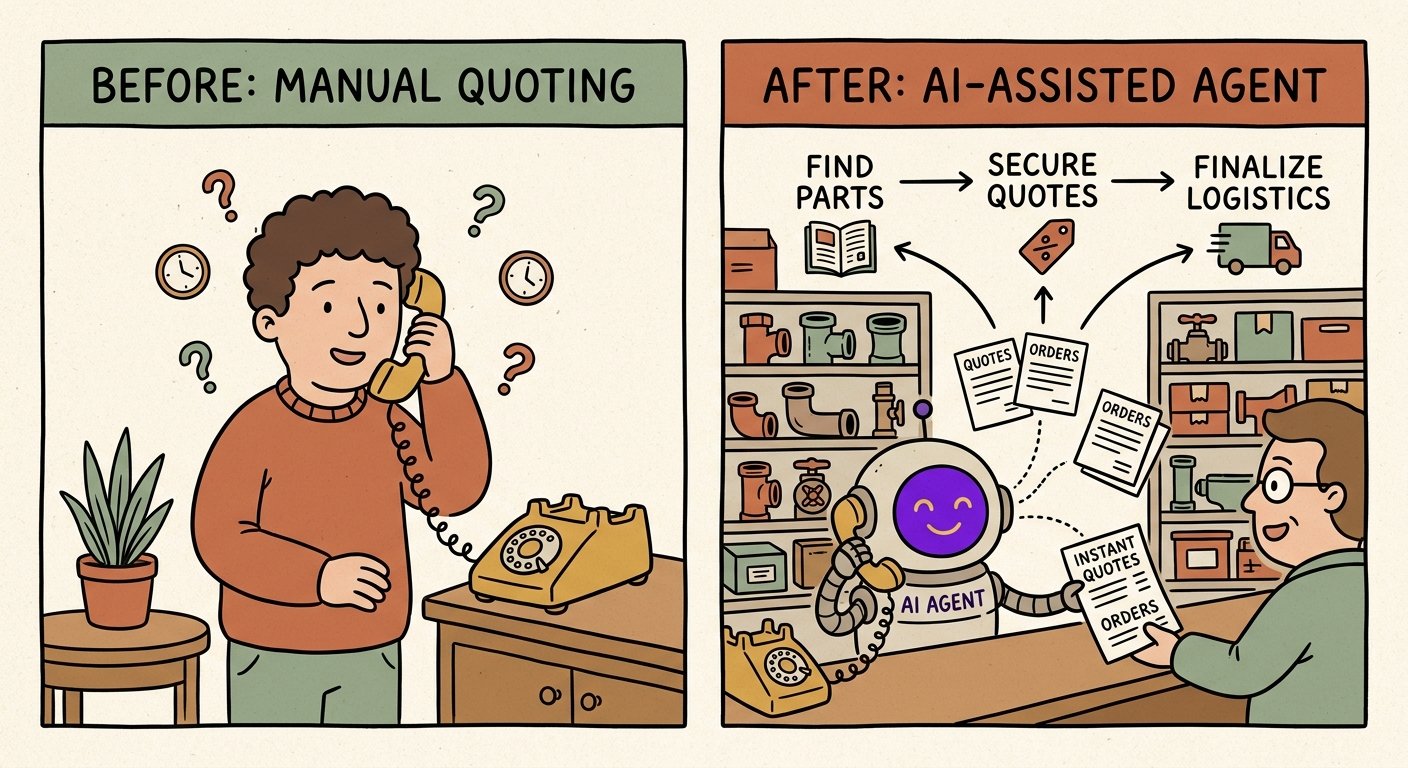
The platform that launched this week, Gushwork, makes the equipment shop accessible to AI buyer agents. The mechanic is straightforward. A buyer who needs a custom part spins up an agent, gives it the spec, and points it at the supplier's shop. The agent reaches the shop on the buyer's behalf, reads back the spec, asks the clarifying questions, and returns a quote. The shop's side of the conversation does not need to change at all. It is still a phone call to a parts counter that has been doing this for twenty years.
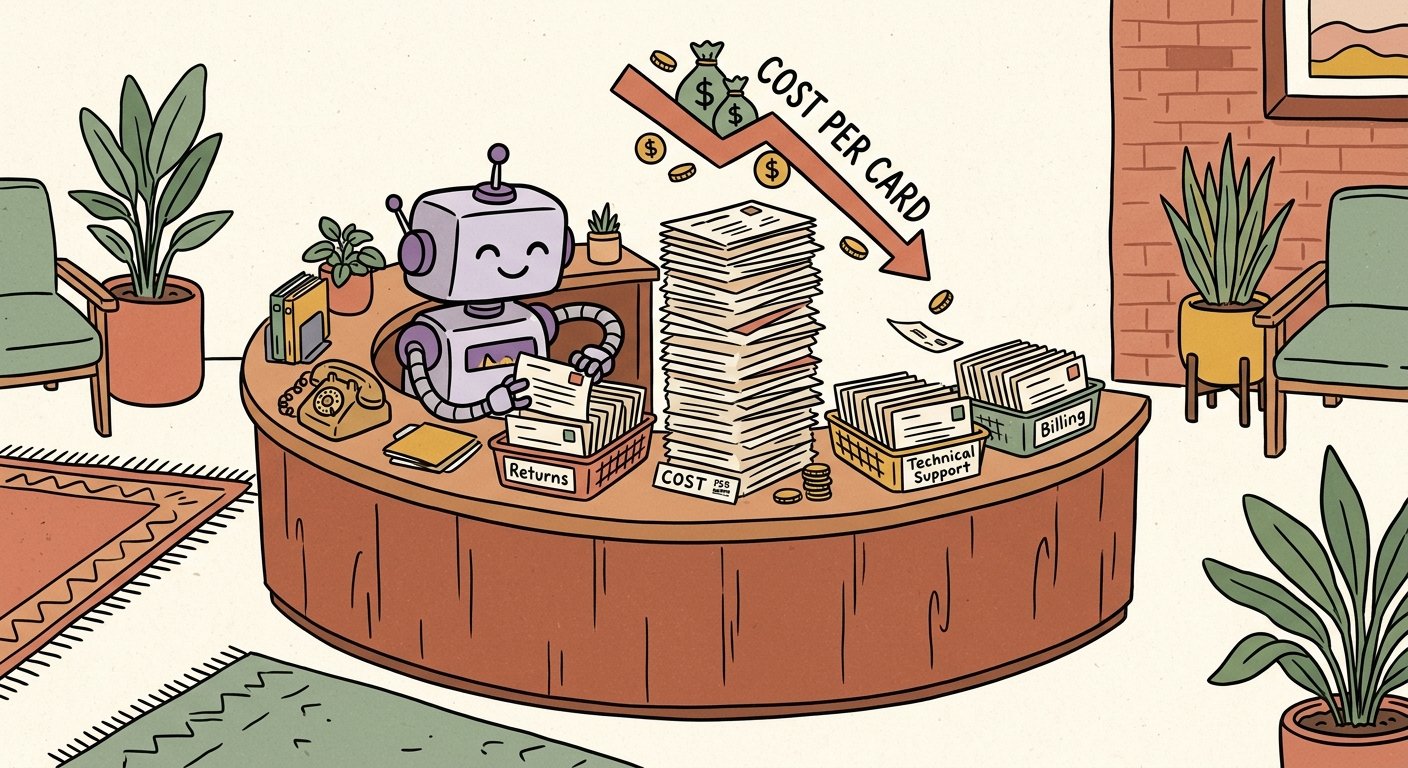
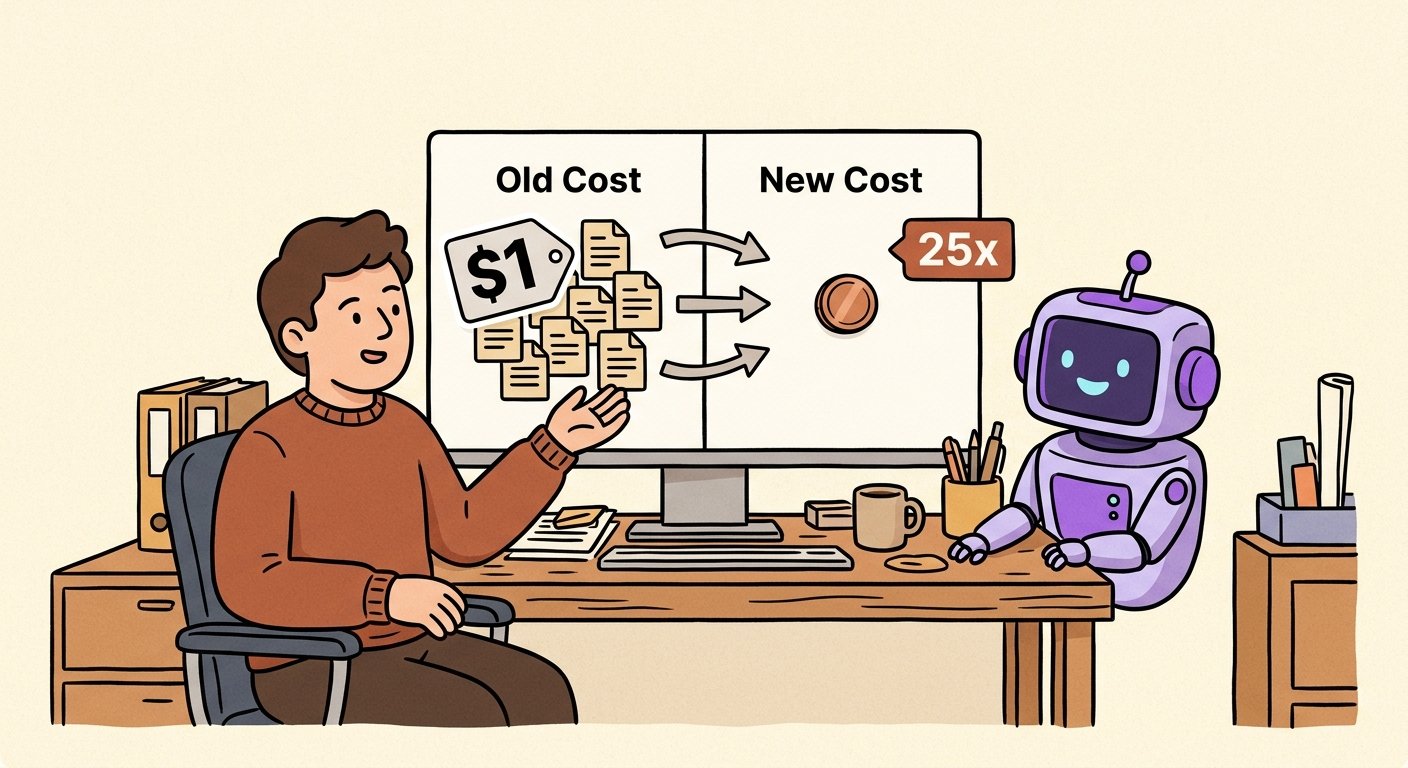
That is the unlock, and it is worth saying it slowly because the industry is going to talk past it for a quarter. The seller does not adopt new software. The seller does not retrain the parts counter. The seller does not even know there is an agent on the other end of the line until it asks a question sharp enough to give it away. What changes is the buyer's cost of running the conversation. The buyer used to pay a person twelve hours to make twelve phone calls and collect twelve quotes. The buyer now pays an agent a few cents per call to run the same loop, and gets the answer in the time it used to take to schedule the first call.
The math for the buyer is not subtle. A senior buyer at a mid-sized industrial operator is paid roughly $120,000 in fully loaded cost. Their time on the phone for one procurement cycle is worth more than the entire annual API spend of the agent that replaced them. The math for the seller is more interesting. The seller still talks to a human on the phone. The seller still closes the deal the same way. What changes is that the seller's inbound pipeline grows by orders of magnitude, because the cost of running an inbound inquiry on the buyer side has collapsed.
Why this matters for the SMB operator
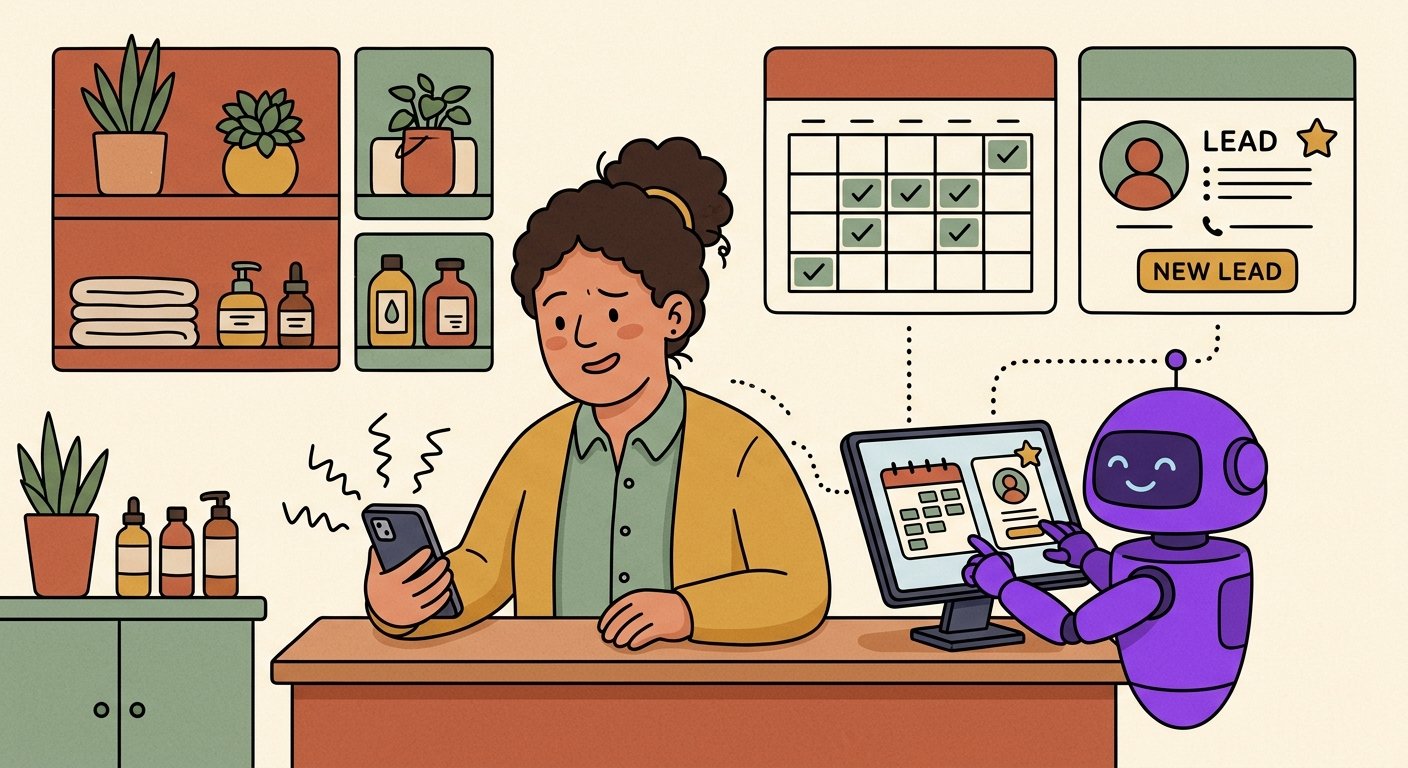
The pattern that Gushwork is pioneering on the buyer side is the same pattern that vertical AI assistants have been quietly shipping on the seller side for two years. A dental clinic that loses three calls a week after hours does not need a generic chatbot. It needs a clinic-specific assistant that knows the schedule, knows which insurance is accepted, knows the difference between a cleaning inquiry and an emergency, and can book the appointment without the front desk ever logging in. A restaurant that misses forty calls during dinner service does not need a generic phone tree. It needs a restaurant-specific assistant that knows the menu, knows the hours, and can text the host when the table the customer wants is open.
These are not general-purpose agent use cases. They are vertical products. The reason they are vertical products is that the value is in the specifics, and the specifics are different for every industry. The Gushwork announcement is interesting because it suggests that the same vertical-product pattern is now arriving on the buyer side of the same transactions. A contractor who used to call three suppliers and wait two days for three callbacks can now run three agents in parallel and have three quotes in twenty minutes. The suppliers who already have a capable, always-on voice layer on their side will win those quotes. The suppliers who do not, will lose them.
That is the strategic implication that matters for the operator running the smaller business in this market. The question is not whether AI will eventually answer the phone at the parts counter. The question is whether the parts counter's phone will be answered by an AI that knows the shop's catalog, the shop's lead times, and the shop's pricing, or whether it will be answered by a voicemail that the buyer's AI cannot parse. The shops that invest in vertical AI for their inbound now are the shops that will still be answering the phone in 2030.
The honest caveats
There are three things this market does not have yet, and pretending otherwise would be a disservice.
The first is standards. The agent reaching out to a supplier today does not have a structured way to read the supplier's catalog. It improvises from the spec. That works for a $50,000 order. It is fragile for a $500,000 order where the wrong spec costs the buyer a six-figure rework. The market needs a lightweight standard for shop catalogs that AI agents can ingest without a human in the loop. Expect to see one in the next twelve months.
The second is liability. When a buyer agent commits to a spec the buyer did not authorize, who pays? When a seller agent quotes a price the seller would not have accepted, who is bound? These are not theoretical questions. They are the questions every procurement lawyer is going to ask in the first quarter of any enterprise rollout, and the answers will shape which verticals adopt first.
The third is discoverability. A buyer agent that does not know the shop exists cannot call it. The first mover advantage for suppliers who publish their catalogs in a form agents can ingest is going to be enormous, and it is going to compress over eighteen months.
The short version
The physical economy is the largest software opportunity left in the economy. It is also the most fragmented, the most phone-driven, and the most resistant to the patterns that worked in retail. AI agents are going to eat it anyway, because the cost curve on the buyer side is collapsing fast enough that the seller's choice is to participate or be invisible. The shops that move first, on both sides, capture the next decade of margin. The shops that wait, compete for a shrinking pool of buyers who still pick up the phone themselves.
For the SMB operator whose business lives on one of these phone-call-driven verticals, the move is not complicated. The move is to make sure that when an AI buyer agent calls your shop tomorrow, the voice on your side of the line knows your business as well as your best employee does. The platforms that ship that, vertical by vertical, are the platforms that will own the next chapter of this trade.
Talk to us about Nextlify.