The easiest AI wins are in the industries with the least tech
While founders fight over the same crowded AI niches, the barbers, HVAC shops, clinics, and restaurants most people ignore are the easiest wins. Here's why low-tech operators convert inbound traffic into booked appointments best with a 24/7 assistant.
A few months ago someone on X made an observation that has stuck with me: the industries with the least tech people are the easiest AI wins, because you'll have less competition. It sounds almost too glib to be useful. But the thread it started is full of operators and builders who have actually tested this, and the pattern they describe is consistent: the businesses that are hardest for a startup to reach are the ones where a working booking page and one follow-up message already beat half the market.
That is a strange sentence to read in 2026, when we are surrounded by frontier model news every week. Yet it keeps coming up. "Most founders are fighting over the same five AI niches while entire industries still run on spreadsheets," one reply said. "I'd take a boring sector with zero tech people over another chatbot wrapper any day." Another put it more bluntly: "the real database is a spreadsheet and one guy's memory."
This is worth unpacking, because it explains a lot about where AI actually produces revenue today versus where it produces headlines.
The competition is still a phone nobody answers
The most common reply to Levels' post was a concrete one. A barber or an HVAC shop with a booking page that works after 6pm, plus one follow-up email, already beats half the market, because the competition is still a phone that nobody answers.
Think about what that means. For a dental clinic or a spa or a home-services company, the single biggest leak in the funnel is not a bad website. It is the gap between someone wanting to book and someone actually picking up the phone. During the workday a receptionist might be there. At 7pm, on weekends, during lunch, the call goes to voicemail, the lead cools off, and the appointment goes to whoever answered first.
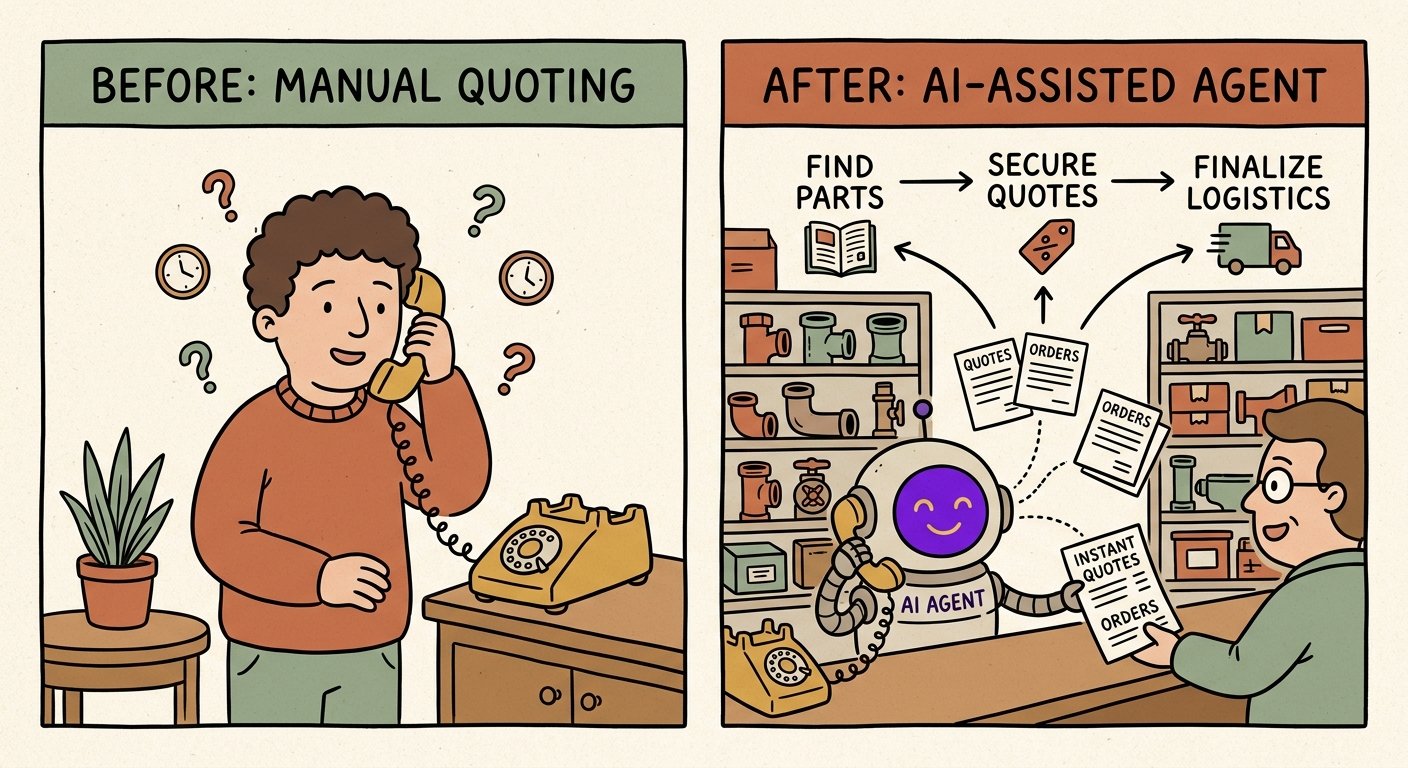
This is precisely the problem an AI assistant is built for. It does not need a fancy model. It needs to answer the question, capture the lead details, and book the appointment, twenty-four hours a day, on the channels the business already has. That is not frontier research. It is a workflow problem, and it is the same workflow problem across dozens of verticals.
Why low-tech operators are the easiest (not the hardest) wins
There is a common assumption that a business with no technical staff is a hard sell. And in one sense it is: the first conversations are often free consulting, because nobody has explained what AI can do for them in plain terms. But the people in the thread consistently reported that this converts anyway, because nobody else bothers to show up.
That is the real insight. The opportunity is not in the sophistication of the buyer; it is in the absence of competition. A clinic owner does not need to understand how the model works. They need to know that every inbound message becomes a booked appointment instead of a missed one, and that the system runs at night and on weekends without them doing anything.
The counterargument in the thread is also worth taking seriously: "The catch is those industries do not buy software online. You win on less competition and lose it back on having to sell in person." That is true, and it is the reason this looks like a goldmine rather than a gold rush. The businesses with the least tech are also the ones that run on relationships and phone calls. You cannot drop a self-serve signup link in front of them and expect them to convert. You have to talk to them.
This is exactly why a contact-first model works for these buyers. You reach out, you explain the value in their language, you show what changes, and the sale happens in a conversation rather than a checkout flow.
What actually changes operationally
The replies in the thread converge on a handful of operational changes that matter more than any AI feature list:
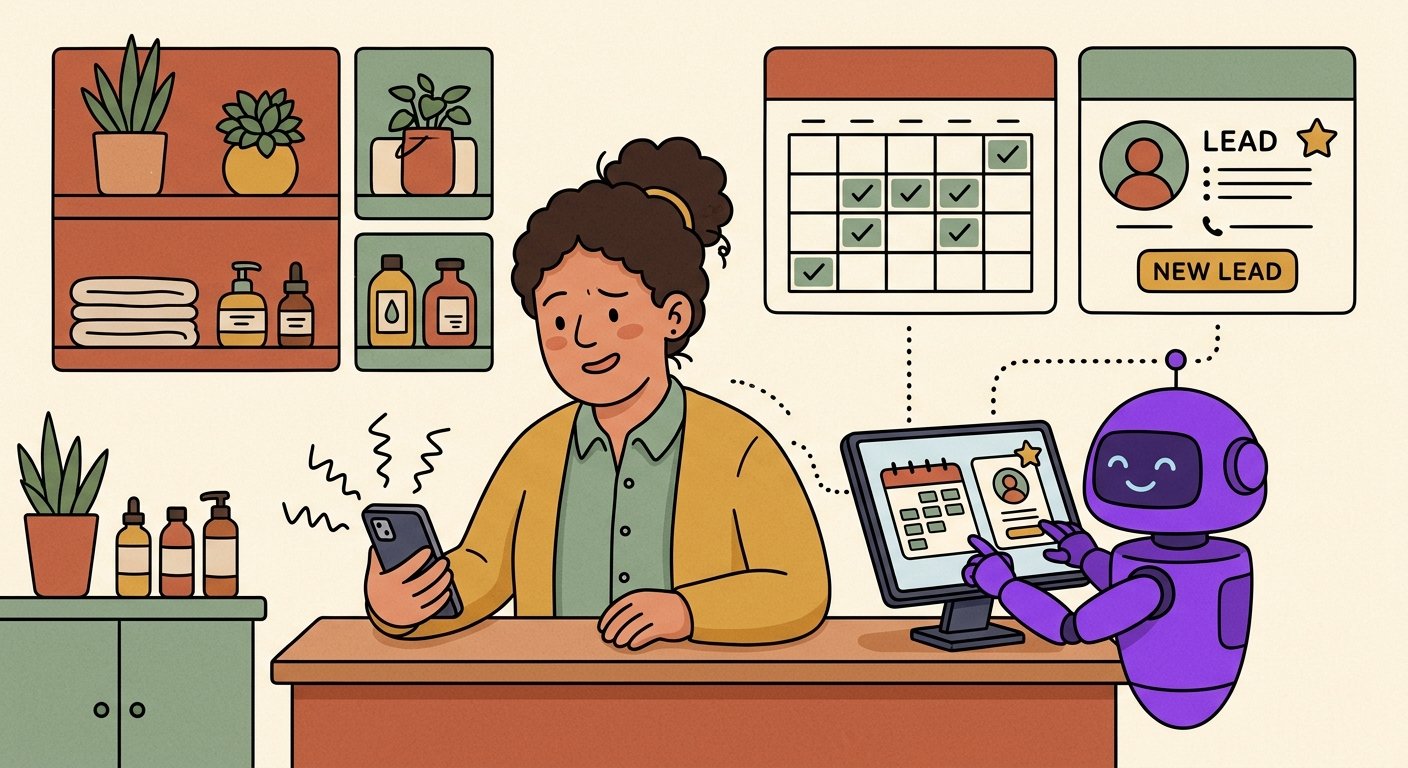
Someone answers every time. The most obvious shift is that the phone is no longer the bottleneck. Inbound messages from the website, the messaging channel, and the phone line all get answered immediately, in the middle of the night as reliably as at 10am. For a business that relies on appointments, that alone is the difference between a full calendar and a quiet one.
Leads stop evaporating. A big share of inbound demand is people who reach out and never follow through. They ask a question, get no answer, and move on. Capturing those details the moment they arrive, and following up, recovers demand the business did not even know it was losing.
The owner stops being the switchboard. In a small clinic or a restaurant or a storage facility, the owner is often the one answering every message between doing the actual work. Offloading that to an assistant is not just about saving time; it is about being able to step away from the phone and run the business.
The boring work gets automated, not the strategy. One reply captured this best: "less AI strategy, more one ugly weekly task automated." The businesses that win are not doing elaborate AI transformations. They are automating the one repetitive task that eats their day, and the effect is immediate.
The practical filter for choosing a vertical
A useful heuristic came out of the thread for identifying the best low-tech verticals: look for work that needs a license, must be done in person, and carries liability. Those three constraints mean a business cannot be fully replaced by software, so the software's job is to bring in more of the work that only a human can do.
That filter points straight at the verticals that are underserved by the AI industry: dental and medical clinics, spas, barbershops, gyms, restaurants, pet services, legal and accounting practices, storage facilities, home services, and tourism operators. These are businesses where the inbound demand is real, the owner is not a developer, and the current tooling is a phone and a spreadsheet.
The same approach, in every vertical
Here is the part that makes this a repeatable opportunity rather than a one-off: the workflow is nearly identical across all of those industries. Answer the question, capture the details, book the appointment, follow up. A dental clinic, a barbershop, and a storage facility all need the same loop. The only thing that changes is the vocabulary of the business.
That is why a catalog of ready-made, industry-specific assistants makes sense. Instead of building a bespoke system for one clinic and starting over for the next, you take an assistant purpose-built for a vertical, with the right questions, the right booking flow, and the right tone, and you deploy it to the next business in that industry. The Dento for a dental clinic, the Gudalis for a restaurant, the FitLead for a gym, the Storo for a storage facility. Same loop, different domain.
The economics follow from the repetition. Because the assistant is already built for the vertical, the work is in the conversation with the operator: showing them what changes, wiring it to their existing website and channels, and getting out of their way.
The takeaway
The industries with the least tech talent are not the hardest AI opportunities; they are, in a very real sense, the easiest. The bar is not a frontier model. The bar is a booking page that works after six, and an assistant that answers when the phone does not.
The founders competing for the same five crowded AI niches will keep fighting over developers and startups. Meanwhile, the operator of a small clinic or a barbershop, a business that has never once thought about a model benchmark, is the one who most needs an assistant that turns the traffic they already have into booked appointments. And the business with the least tech is the one where showing up at all already puts you ahead of the field.
Talk to us about Nextlify and how a ready-made assistant fits the vertical you run.