The last unautomated channel: what an AI receptionist changes for a local business
VoiceFleet's AI receptionist points at the inbound channel most local businesses never instrumented: the phone. What changes operationally when every call is answered, booked and summarised.
The last unautomated channel
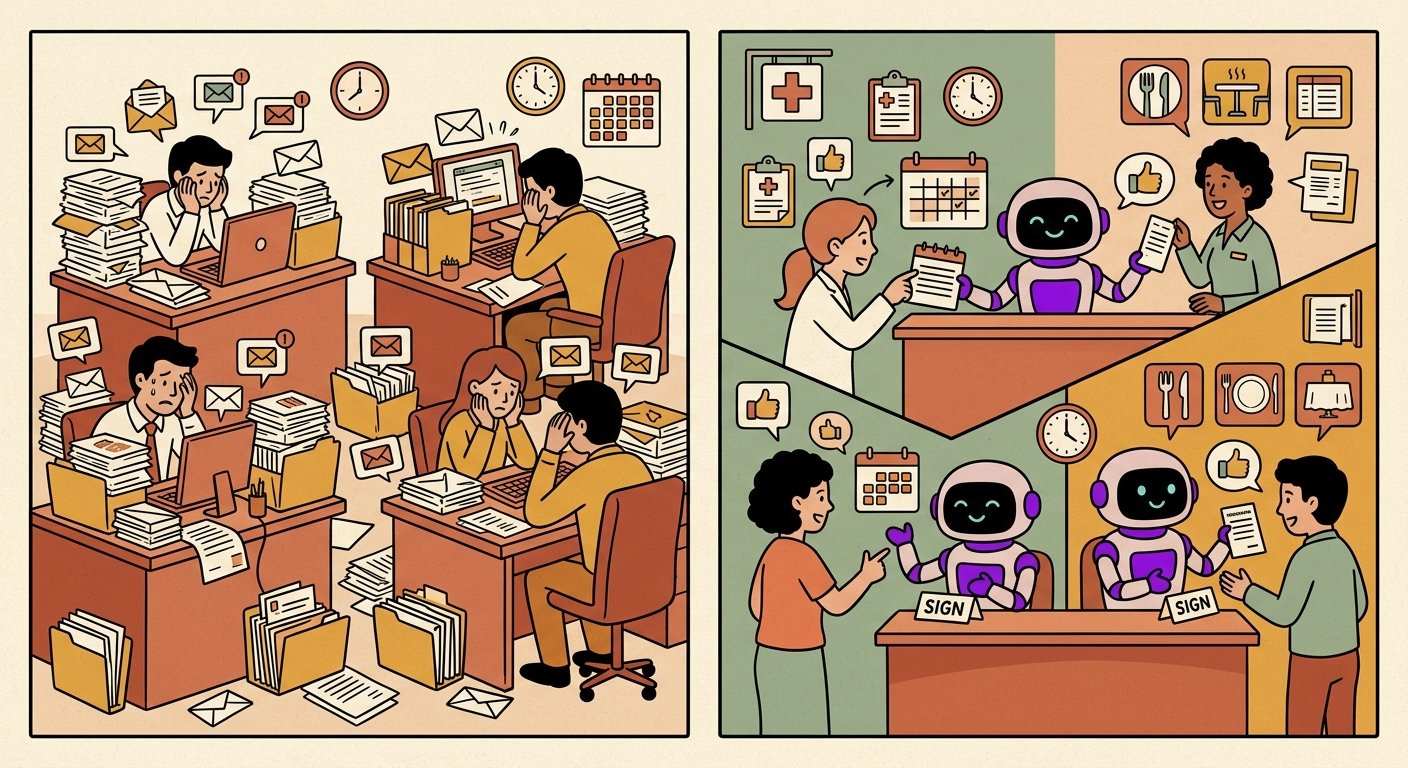
Most local businesses have spent three years pointing AI at their website. A chat widget on the booking page, automated replies on Instagram, an assistant in the messages that qualifies and books. Meanwhile the phone still rings, and it rings at exactly the wrong moment: while the hygienist is chairside, while the only receptionist is taking a card payment, while the plumber is under a sink with both hands occupied.
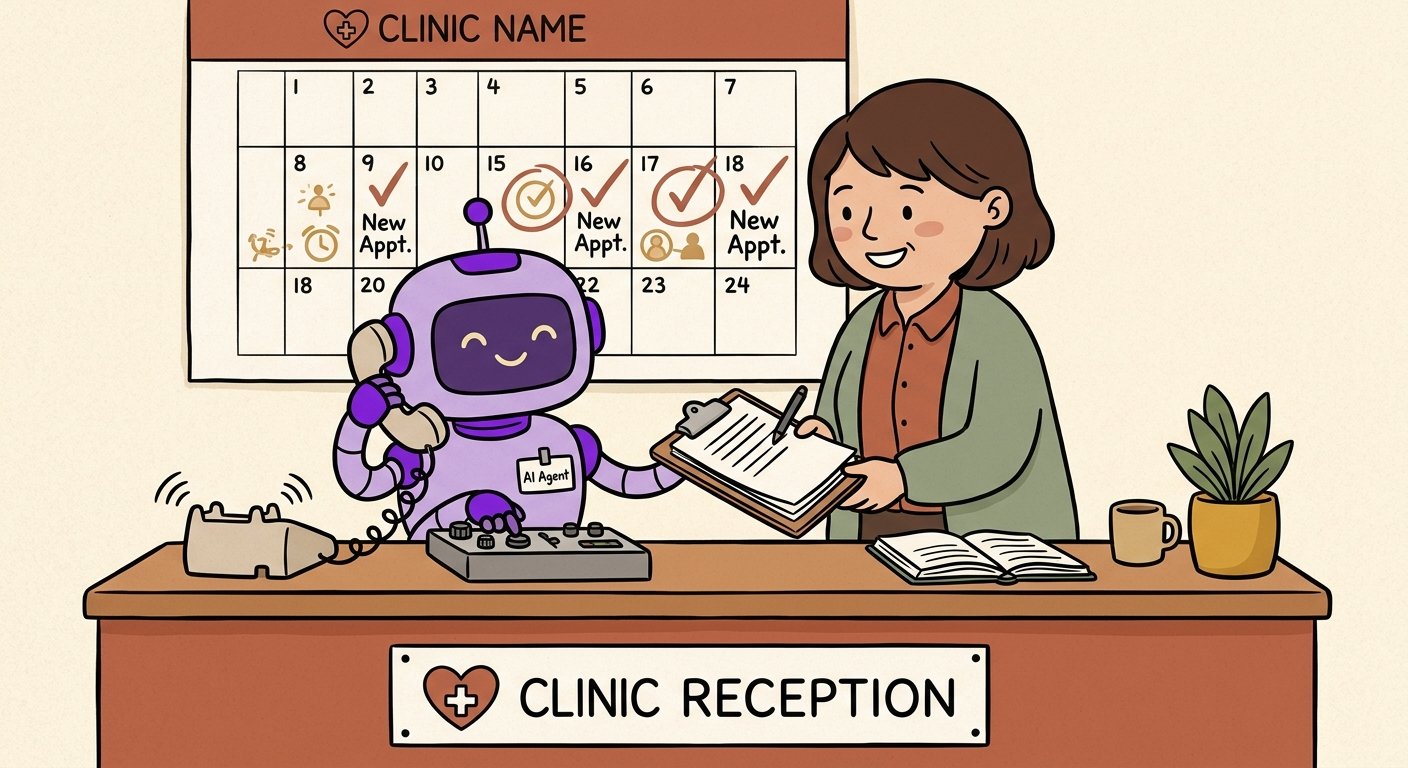
VoiceFleet, an inbound AI voice receptionist listed on aifeed.dev this week, is a clean statement of that problem. According to its product material it answers business calls using instructions and FAQs the owner configures, captures caller names and details, books appointments on a connected calendar, forwards from an existing business number, escalates the cases the owner flags, and produces a summary after each call. That is a receptionist job description, minus the desk.
What makes it worth an operator's attention is not that voice models got better. It is that the phone is the last inbound channel with no capture layer at all. A missed call leaves no record. Nobody knows how many bookings walked to the next business on the list, because the evidence was destroyed the moment the call went unanswered.
What the product actually does
Strip the marketing and there are five functions, all of them borrowed from a human front desk:
- Answer. Every call picks up immediately, during business hours and after.
- Answer questions. The assistant speaks from an FAQ and instruction set the owner writes, rather than improvising.
- Capture. Caller name, number, reason for calling, urgency. Sent onward as an SMS or email notification.
- Book. It checks real availability on a connected calendar and confirms the slot to both sides, including reschedule handling.
- Escalate. Calls that match the owner's escalation rules are transferred to a human. VoiceFleet describes the flow as one-directional: the existing business line forwards in, the AI handles the call, and it reaches a mobile only when a human is genuinely needed.
The setup claim is under an hour, which is the number that matters commercially. A system that needs a consultant to install it does not get installed by a four-person dental practice.
The calendar integration is the whole ballgame
An assistant that answers questions is a nicer voicemail. An assistant that writes into the real calendar is a booking channel, and the difference between those two is entirely integration depth.
VoiceFleet publishes native connections to Google Calendar, Outlook, Calendly, Cal.com, Square Appointments, Phorest, ResDiary, Open Dental, Dentally, Cliniko, SimplyBook.me and others. That list is not decoration. It is the product.
Consider what a general-purpose voice builder has to do to book a hygiene appointment at a practice running Open Dental: authenticate, read the provider's schedule, understand chair-time rules, write the appointment, then fire the confirmation. Every practice management system has its own schema and its own idea of what "available" means. A horizontal tool answers the phone beautifully and then hands the caller a callback promise. A vertical tool either closes the booking or it is not in the category.
This is the same lesson that applies to chat: the assistant that can complete the transaction beats the assistant with the better conversation. Operators should judge a voice layer by the integrations list, then by latency, then by vocabulary, in that order.
What changes operationally
Adopting an always-answering line is not a software purchase. It moves four things at once.
The front desk stops being a switchboard. Reception staff stop absorbing every call and start handling the exceptions the system escalates. The job narrows toward the things only a person can do: a nervous patient at the counter, an insurance dispute, a delivery that arrived wrong.
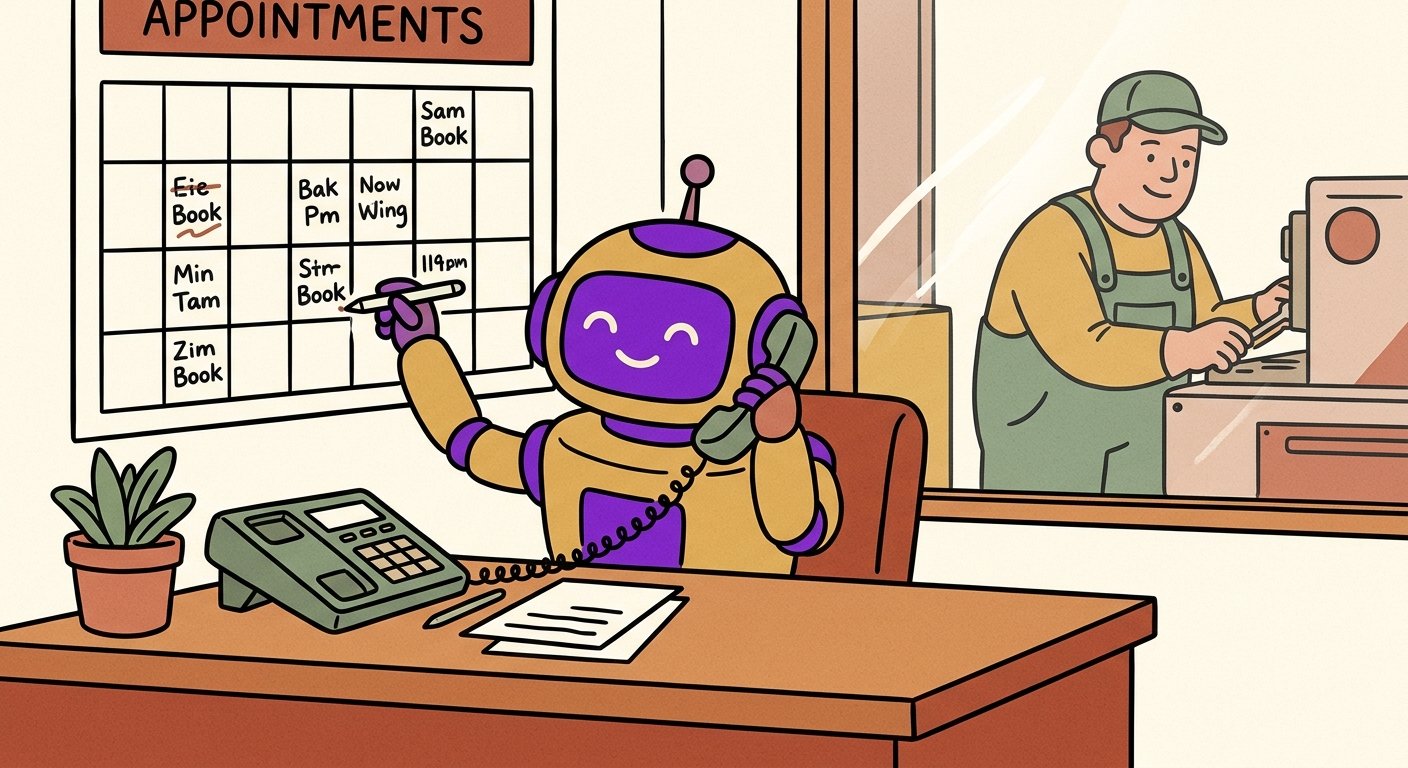
After-hours becomes a revenue window. The caller who phones at 19:40 about a Saturday slot is not a nuisance, they are a booking. Voicemail converts them into a callback you may not make. An answering layer converts them into a slot in the calendar, subject to the rules you set.
Escalation rules become the new operations document. Someone has to decide what counts as urgent: a same-day dental emergency, a burst pipe, a cancellation inside 24 hours. Write that list before you buy anything. Vendors cannot infer your triage policy, and a mis-set rule is how a routine question gets patched through to a technician on a roof.
Call summaries create a record where there was none. Structured post-call detail is quietly the most valuable output, because it turns an invisible channel into a measurable one. It is also the only way to audit the assistant: read twenty summaries a week and you will find the FAQ gaps yourself.
Vertical by vertical
The same five functions land differently depending on the trade.
Dental and medical clinics. Appointment scheduling, rescheduling, prescription and records questions, after-hours triage. The intake script matters as much as the booking: the assistant must ask the right screening questions without sounding like a form.
Salons, spas and barbers. Service enquiries, availability, cancellations. Cancellation handling alone justifies the line, because one recovered slot a week at a typical ticket price covers the subscription.
Restaurants. Reservations, opening hours, directions, and takeaway orders where the flow allows. Booking integrations matter here more than conversational polish, since a table is only worth reserving if it lands in the system the floor staff actually read.
Trades and home services. Job enquiries, quote requests, emergency call-outs. This is the highest-payoff vertical of the lot, because the operator is physically unable to answer while working, so nearly every mid-job call is lost.
Legal, accounting and property. Client intake, consultation scheduling, document requests, viewing bookings. Lower volume, much higher value per call, and a stronger case for strict escalation rules.
The common thread: businesses whose intake is a conversation, whose revenue is an appointment, and whose staff are busy doing the work that generates the appointment in the first place.
Three questions before you buy a voice layer
One: how is it priced, and what does overage cost? VoiceFleet's published EU pricing runs €99 per month for 500 minutes, €299 for 1,000 minutes with five parallel calls and human transfer, and €599 for 2,000 minutes with ten parallel calls. Minute-based pricing is normal in this category and it is also the thing that surprises buyers, because a busy line with long calls burns minutes faster than a quiet one. Model your real call volume and average call length before you sign, not after.
Two: what happens at the edge of the script? Ask what the assistant does when the caller asks something outside the FAQ, speaks a different language, or refuses to give a callback number. The answer tells you whether you are buying a receptionist or a menu tree with a nicer voice.
Three: where does the data live and who can hear it? Voice carries more personal detail than any other inbound channel, and health, legal and financial verticals have rules about it. Regional deployment options exist in this category; treat them as a buying criterion, not a footnote.
Where voice fits next to everything else
The mistake is treating the voice layer as a replacement for the rest of the inbound stack. It is the last piece of a set.
A business converts inbound traffic from four surfaces: the website, messaging channels, the phone, and walk-ins. The first two are where vertical assistant apps have been concentrated, because they are text, cheap to run and easy to instrument. Voice arrived last because it is harder. But the operational logic is identical across all four: answer immediately, qualify against a script the owner controls, capture the details, book into the real system, escalate what a human should handle, and leave a record.
Once you see it that way, the build-or-buy question answers itself for most operators. You are not assembling an AI strategy. You are plugging a known leak in a channel you already pay for.
What to measure in the first thirty days
Three numbers. Calls answered versus calls received, which should be all of them. Bookings created by the assistant as a share of total bookings, which tells you whether it is being used or routed around. And the escalation rate, which should fall over the first month as your FAQ and rules absorb the recurring questions.
Add a fourth if you want the honest one: how many calls the staff still let ring during peak hours. If that number does not move, the new line is sitting next to the old habit rather than replacing it.
The phone has been ringing unanswered for a century and every operator has quietly accepted the loss. That is no longer a reasonable position, because the cost of answering is now a monthly fee and a forty-five minute setup.
Talk to us about Nextlify

A €29-A-Month Tool Now Does the Marketing Chore No Store Owner Chose to Do
The 24/7 AI Receptionist: Why Local Service Businesses Are Replacing Voicemail with Automated Booking