The Real Economics of AI Sales Tools: Why Inbound Conversion Trumps Outbound Automation
While outbound AI SDRs drive prospecting costs toward zero, businesses still leak high-intent visitors at the front door. Here is why inbound conversation delivers far higher ROI for service operators.
The Collapsing Cost of Outbound Outreach
The economics of sales prospecting shifted again this week. When outbound sales automation platform AiSDR announced a flat rate of $1.50 per researched prospect with unlimited touchpoints, it underscored a defining trend in the business applications of artificial intelligence: the marginal cost of generating cold outreach is rapidly approaching zero.
For years, outbound pipeline generation required expensive tech stacks and dedicated human capital. Sales development representatives spent hours scraping LinkedIn profiles, verifying email addresses across waterfall enrichment services, drafting personalized hooks, and managing deliverability across secondary domains. Today, autonomous pipelines handle prospect discovery across billions of records, compose dynamic multi-channel sequences, classify inbound replies, and log interactions directly into customer relationship management systems without manual intervention.
To a growth-oriented executive, a $1.50 fully researched prospect sounds like an irresistible bargain. If pipeline generation is cheap, the intuitive response is to scale volume. Yet experienced business operators recognize a familiar paradox: when the cost of sending messages drops by an order of magnitude, inbox saturation rises in lockstep. Response rates fall, domain reputation becomes harder to protect, and prospective customers build defensive filters against automated outreach.
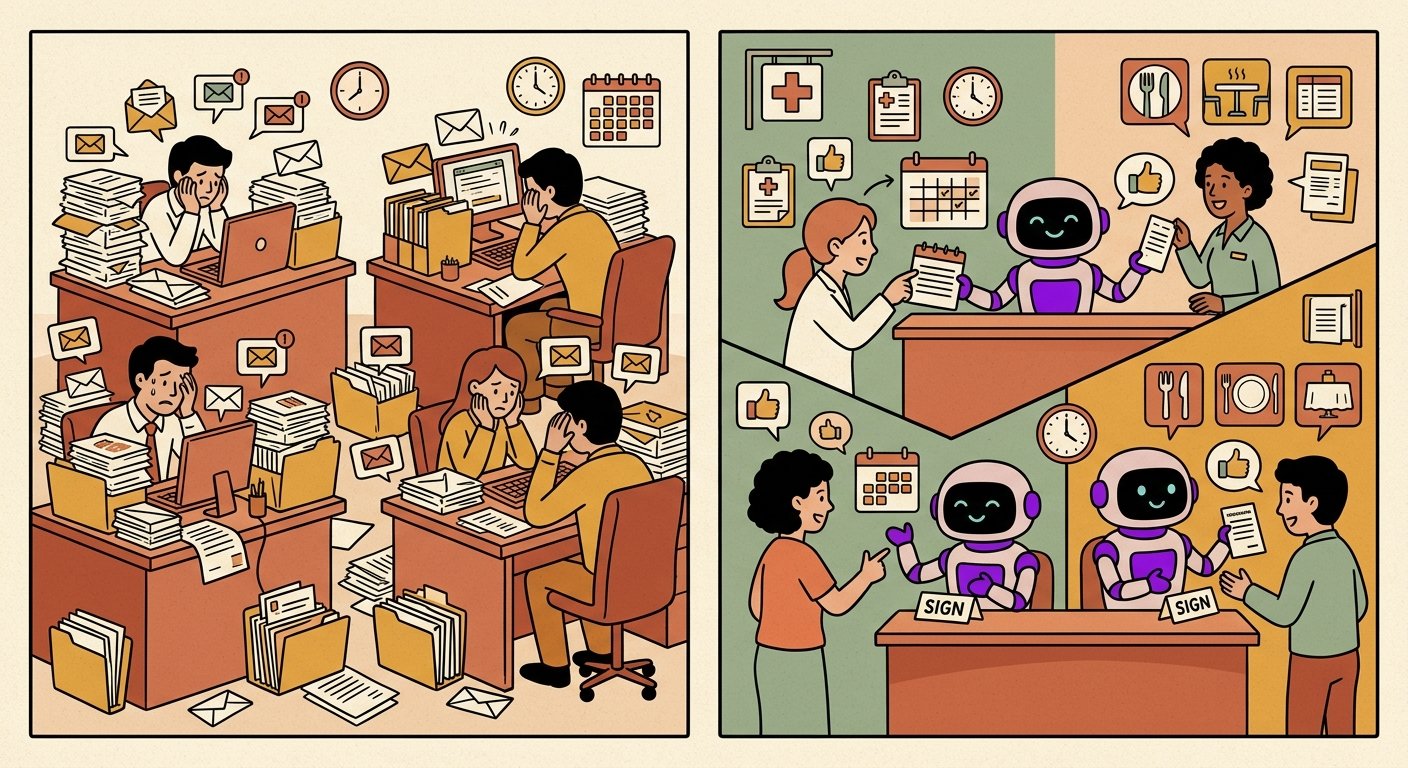
More importantly, this intense focus on automating outbound pipeline obscures an uncomfortable operational reality. Most businesses do not suffer from an inability to generate outbound noise. They suffer from a leaky front door. While organizations pour resources into pursuing cold prospects who have never heard of them, they routinely abandon warm, high-intent prospects who have already arrived at their digital storefront.
The Leaky Front Door in High-Touch Verticals
Consider the typical customer journey across local and service-driven industries. A patient searching for an urgent dental appointment visits a local practice website at 8:30 PM on a Tuesday. A homeowner seeking a storage unit browses options during lunch. A professional looking to retain counsel navigates a boutique firm's site on a Saturday morning.
In every one of these scenarios, the prospect possesses immediate intent. They arrived via organic search, referral, or localized advertising. They have a pressing problem, a budget, and an appetite to schedule a consultation or appointment immediately.
Yet what happens when they land on the website? In the majority of service businesses, they encounter two primary friction points:
- A static web form. The visitor is asked to submit their name, email, phone number, and a paragraph explaining their need, accompanied by a promise that "someone will get back to you within 24 to 48 business hours."
- An unstaffed phone number or voicemail prompt. If the inquiry occurs outside standard operating hours—which accounts for more than 40 percent of local service discovery—the call rings out or directs the caller to an answering machine that is checked intermittently the following morning.
By the time a front-desk receptionist or office manager reviews that web submission eighteen hours later, the prospect has already moved down the search results page, contacted a competitor who responded immediately, and booked an appointment elsewhere.
Chasing cold outbound prospects while ignoring website conversion leaks is the operational equivalent of buying more water to fill a bucket full of holes. The unit economics of customer acquisition cannot balance when existing inbound demand is consistently squandered.
The Math of Marginal Returns: Inbound Conversion vs. Outbound Churn
To understand why inbound conversion yields superior return on investment, compare the mathematics of both acquisition channels.
The Outbound Funnel
In an outbound campaign, even one powered by advanced automation at $1.50 per contact, the conversion path is long, fragile, and heavily discounted by buyer resistance:
- 1,000 cold prospects reached: At $1.50 each, the initial data and enrichment cost is $1,500.
- Positive response rate: In saturated B2B and consumer markets, positive reply rates rarely exceed 1.5 to 2 percent. That yields 15 to 20 interested conversations.
- Qualified discovery meetings: Drop-off between initial reply and calendar booking typically cuts that number down to 4 to 6 scheduled calls.
- Closed business: Assuming a standard 25 percent close rate, 1,000 cold touches translate into 1 or 2 closed accounts.
When factoring in domain infrastructure, software overhead, and the human time required to handle qualified replies, the effective acquisition cost per closed customer remains substantial. Outbound can certainly work, but it demands constant volume to combat diminishing returns.
The Inbound Conversion Funnel
Now consider a service operator—such as a dental clinic, a medical wellness center, a fitness studio, or a commercial law practice—receiving 1,200 unique website visitors per month.
These visitors are not cold prospects scraped from a database. They actively searched for services, clicked an organic listing, or followed a recommendation.
- Baseline conversion: Typically, only 2 to 3 percent of website visitors complete a static contact form or pick up the phone, resulting in 24 to 36 inbound leads.
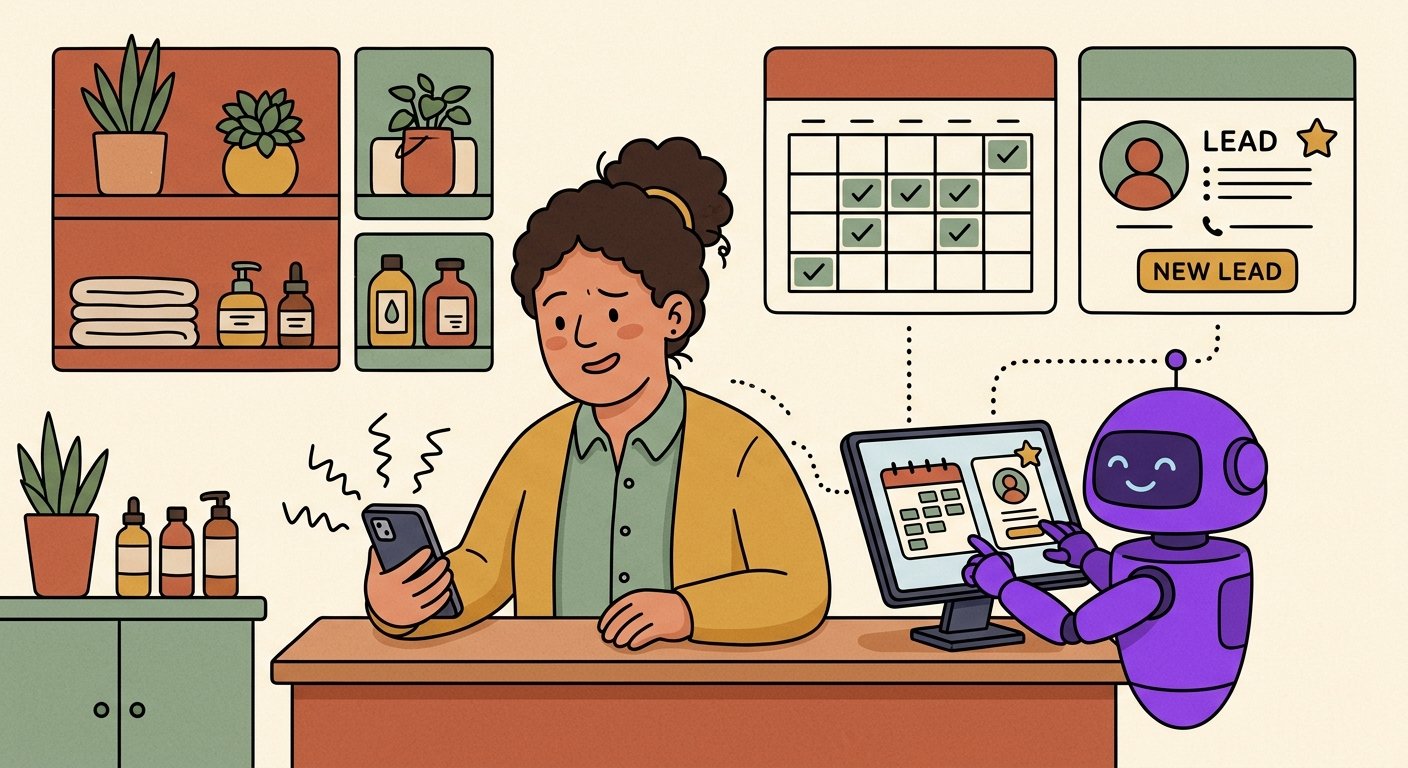
- Active front-door conversion: Introducing an intelligent, verticalized assistant that engages visitors in real time, answers specific service questions, verifies availability, and books calendar appointments around the clock lifts conversion to 5 or 6 percent.
- The net gain: An additional 25 to 35 high-intent appointments booked every single month from traffic the business already owns and pays for.
The marginal cost of capturing an existing visitor who is already on your site is negligible compared to the recurring cost of sourcing, enriching, and emailing cold strangers. Inbound conversion fixes the core unit economics of the business before adding top-of-funnel fuel.
Why Generic Chatbots Fail and Vertical Assistants Win
When service operators hear about automated front-desk assistants, many recall the frustrating customer experience of first-generation website chatbots. Those legacy widgets were built on rigid decision trees or open-ended generative models that offered little practical utility.
A generic chatbot responds to an anxious patient by reciting paragraphs from an FAQ page or apologizing that it cannot access the scheduling calendar. It creates conversational dead ends.
Modern vertical AI assistants succeed because they are engineered around the specific operational workflows of an industry:
- Dental and Healthcare Practices: Solutions like Dento and Clinica understand treatment categories, chair-time requirements, and routine patient intake requirements. When a patient asks whether the clinic handles root canal consultations or emergency tooth pain on short notice, the assistant provides exact answers and guides the patient directly into an open appointment slot.
- Fitness and Wellness Studios: Applications like FitLead engage prospective members the moment they explore training options, answering questions about class schedules, coach specializations, and membership tiers, immediately securing an introductory reservation while motivation is high.
- Hospitality and Dining: Solutions like Gudalis capture table reservations, answer specific menu and dietary inquiries, and confirm booking policies directly on digital channels without pulling front-of-house staff away from diners.
- Professional Services and Law: Assistants like Legalis screen prospective clients against practice focus areas, gather structured background details, and route qualified consultations to the appropriate partners.
- Personal Services and Local Operators: Vertical applications such as SpaSlot for spas, Pawsy for veterinary and pet care, Barberbot for grooming, Storo for self-storage facilities, and Tourly for tour operators solve the exact operational bottlenecks unique to their respective trades.
These specialized assistants do not attempt to be general-purpose conversationalists. Their mandate is focused and decisive: capture inbound attention, answer practical questions with precision, remove booking friction, and turn anonymous digital visits into confirmed business.
The Operational Reality for Non-Technical Business Owners
The fundamental disconnect in much of the current artificial intelligence discourse is the assumption that business owners want to be systems integrators.
A dental practice owner, a restaurant general manager, or a boutique fitness studio founder has zero interest in managing API keys, designing prompt templates, or wiring together multi-agent orchestrations. They have shifts to cover, inventory to manage, patients to treat, and clients to advise.
What non-technical operators need are turnkey, vertical applications that connect directly to their digital presence and perform a dedicated operational job with quiet reliability.
When an assistant operates 24 hours a day, seven days a week, it fundamentally changes the commercial posture of a local business:
- Zero missed evening inquiries: High-intent evening and weekend traffic converts immediately instead of vanishing to competitors.
- Relieved front-desk staff: Administrative teams spend less time answering repetitive questions regarding parking, pricing, and operating hours, freeing them to deliver exceptional service to in-person clients.
- Cleaner calendar density: Automated qualification ensures that scheduled appointments arrive with complete intake details, reducing no-show rates and administrative rescheduling.
Strategic Priority: Protect the Front Door Before Scaling the Noise
The collapse of outbound generation costs heralded by tools like AiSDR is an impressive technical milestone. As autonomous tools proliferate, prospecting workflows will continue to get faster and cheaper.
However, business strategy is ultimately determined by constraints and bottlenecks. In an era where cold outreach is commoditized, the rarest and most valuable asset is genuine customer attention and inbound intent.
Before investing time and budget into scaling cold outbound campaigns, audit your digital front door. Determine what percentage of your current website visitors abandon their journey because nobody was available to answer their question or confirm their booking at 9:00 PM.
Capture the demand you already have. Fix the conversion leaks that silently drain your marketing return. When your front desk converts inbound intent into booked appointments with consistency, every other growth initiative becomes vastly more profitable.
Talk to us about Nextlify.
Conversational Patient Intake in Real Clinics: What The Lancet Study Teaches Practice Operators
Vertical AI is moving from dashboards to doing the work: what an AI property manager shows operators