
Conversational Patient Intake in Real Clinics: What The Lancet Study Teaches Practice Operators
The Lancet published the first prospective trial of conversational AI intake in real primary care. Clinicians reported AI summaries prepared them in 75% of visits. Here is what healthcare practice operators can learn about structured pre-visit intake, front-desk capacity, and patient conversion.
The Intake Bottleneck in Modern Outpatient Care
For the operator of an independent outpatient clinic or specialized medical practice, the most congested operational junction is not the exam room. It is the front desk.
In standard ambulatory workflows, patient arrival triggers a predictable cascade of administrative friction. Inbound callers wait on hold to book routine visits. Front-office coordinators field repetitive questions about provider availability, insurance acceptance, and clinic policies. Meanwhile, patients arriving on site are handed clipboards with static paper forms or directed to generic web portals that require tedious data entry.
The clinical consequence of this administrative drag is well known to practice managers: incomplete patient histories, rushed initial consultations, and mounting administrative fatigue for staff. Physicians frequently spend the first seven to ten minutes of a scheduled fifteen-minute appointment clarifying basic timelines and verifying symptoms that could have been gathered before the patient ever arrived. When front-desk staff are overwhelmed by phone calls and intake paperwork, response times lag, qualified appointment requests slip through the cracks, and patients look elsewhere for timely care.
A landmark clinical trial published in October 2026 provides empirical proof that patient-facing conversational systems can safely break this bottleneck in real-world practice environments.
What The Lancet Study Established About Pre-Visit Conversational Intake
On October 8, 2026, The Lancet published the findings of the first prospective feasibility trial evaluating a patient-facing conversational artificial intelligence system within an active ambulatory clinic. Conducted by researchers at Beth Israel Deaconess Medical Center (BIDMC) in Boston in collaboration with Google Research, the study enrolled adult patients scheduled for urgent ambulatory care visits.
Prior to their in-person clinical appointments, 98 patients engaged with an interactive conversational system from home using a secure text-based interface up to five days before their scheduled consultation. The system gathered detailed symptom chronologies, structured the patients' presenting complaints, and compiled clinical summaries for the attending physicians to review before seeing the patient.
Crucially, the study was designed around rigorous real-time oversight: board-certified internal medicine physicians monitored every conversational interaction live, with explicit criteria to intervene if patient safety or emotional well-being was compromised.
The empirical results established several vital operational benchmarks:
- Zero Safety Stops Required: Across all 98 completed patient interactions, not a single conversation required real-time physician termination or emergency intervention under the protocol safety criteria.
- High Preparation Utility for Providers: Attending clinicians reported that the structured conversational summaries helped them prepare for visits in 75% of cases.
- Direct Influence on Care Delivery: Clinicians indicated that the pre-visit summaries influenced their diagnostic or management approach in more than half of the recorded patient visits.
- Diagnostic Concordance: The conversational system's differential diagnosis list matched the evaluating physician's final in-person diagnosis 90% of the time.
For healthcare executives and clinic directors, these findings demonstrate that patients can comfortably and safely provide structured medical context through conversational text interfaces before setting foot in an exam room.
Why Conversational Intake Outperforms Static Web Forms
Traditional clinic software vendors have long attempted to address intake bottlenecks by offering digital portals and PDF intake questionnaires. Yet practice managers consistently report that compliance with pre-visit digital forms remains disappointingly low, rarely exceeding thirty to forty percent of scheduled appointments.
The reason is fundamentally behavioral. Static forms present patients with extensive checklists, dense medical jargon, and mandatory fields that feel hostile and detached. When patients are asked to self-select complex clinical categories on a dropdown menu, they frequently skip sections or abandon the form altogether, choosing to fill out a paper clipboard upon arrival instead.
Conversational interfaces succeed where static forms fail because they mirror how patients naturally communicate:
- Adaptive Dialogue: Instead of confronting the patient with twenty questions at once, a conversational assistant asks one question at a time, adapting subsequent inquiries based on the specific answers provided.
- Natural Language Descriptions: Patients describe their concerns in their own words. An assistant clarifies duration, severity, and related factors through conversational prompts rather than rigid numeric scales.
- Asynchronous Convenience: Patients complete their intake at their convenience from their mobile phone or desktop prior to the appointment, without feeling rushed in a crowded clinic waiting room.
- Clean Structured Summaries: Rather than handing an unedited transcript to the care team, the system synthesizes the patient's input into concise, organized briefing points that front-office staff and clinicians can digest in seconds.
When pre-visit data collection feels like an intuitive conversation rather than an administrative hurdle, patient completion rates rise substantially.
Operational Reality: Research Diagnostics vs. Front-Desk Automation
While The Lancet study focused on clinical diagnostic reasoning, practice operators must distinguish between academic research systems and immediate commercial automation needs.
Medical research institutions evaluate diagnostic assistants to determine how automated systems formulate differential diagnoses under direct clinical supervision. For an independent medical clinic, cosmetic dermatology center, dental group, or specialized physical therapy practice, deploying diagnostic reasoning software is neither practical nor necessary. Clinical diagnosis remains the exclusive domain of the licensed practitioner.
The immediate, high-ROI opportunity for private practice operators lies in front-office operational automation:
1. 24/7 Inbound Inquiry Handling
Prospective patients routinely browse clinic websites outside standard business hours—during evenings, weekends, and early mornings. When a patient with an urgent concern or routine inquiry visits a clinic website at 9:00 PM and finds only a static contact form or an answering machine, the probability of booking that appointment drops dramatically. A 24/7 conversational assistant immediately answers common practice questions regarding accepted insurance, service offerings, clinic locations, and operational hours.
2. Qualified Appointment Booking
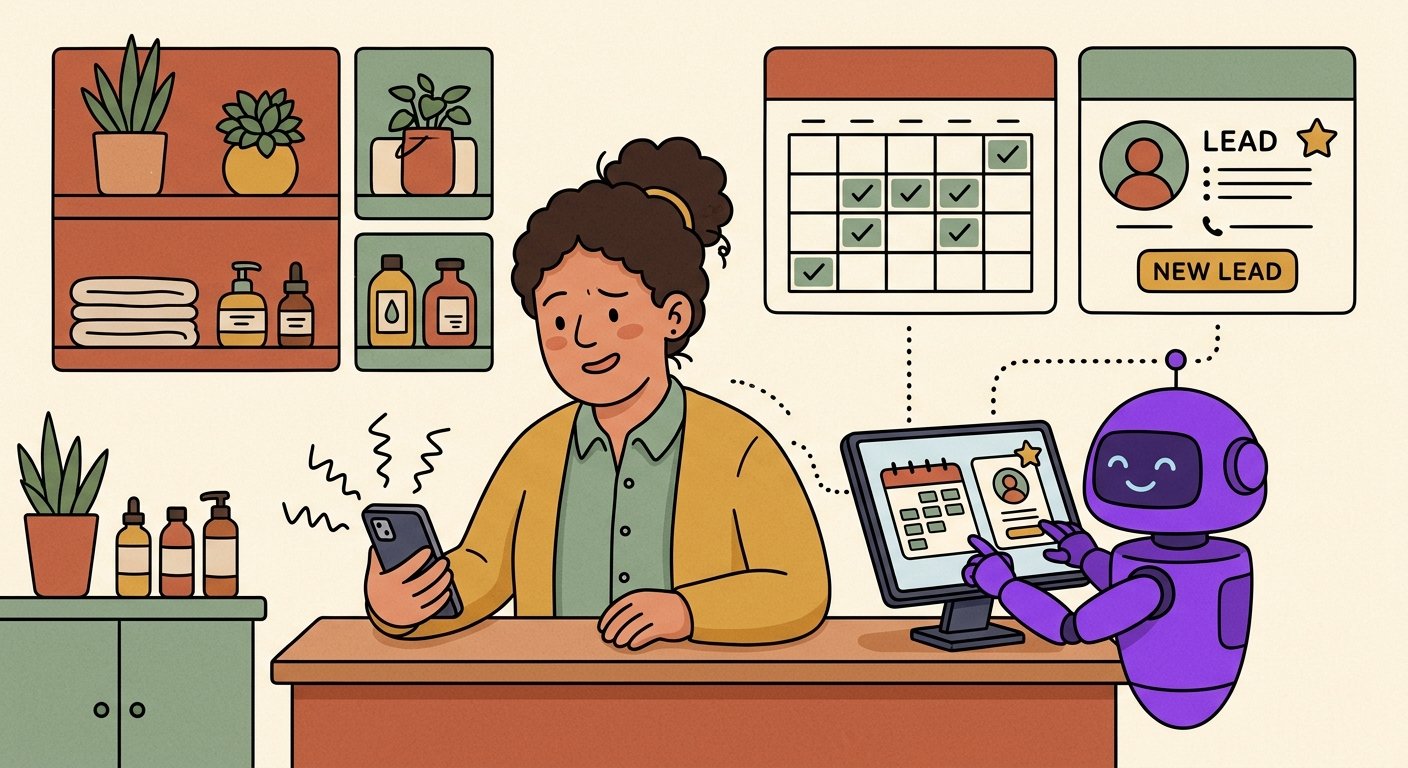
Instead of routing every scheduling inquiry through multiple rounds of phone tag, an automated assistant qualifies the patient's scheduling request, confirms appointment availability, captures essential contact details, and books the consultation directly into the practice management calendar.
3. Pre-Visit Administrative Intake
Once an appointment is booked, the assistant initiates the pre-visit intake dialogue. By collecting the primary reason for visit, symptom timeline, and relevant preferences in advance, front-office staff receive complete administrative files before the patient arrives.
4. No-Show Reduction Through Proactive Engagement
Inbound patient capture is only half the battle; ensuring scheduled patients actually attend their visits determines clinic profitability. Automated conversational follow-ups confirm attendance, answer logistical questions about parking and arrival requirements, and allow patients to reschedule effortlessly if conflicts arise, protecting clinic utilization rates.
Vertical-Specific Design: The Advantage of Purpose-Built Practice Apps
Generic chatbots and horizontal customer service tools fail in healthcare settings because they lack domain-specific conversational structure. When a clinic tries to adapt a general-purpose website chat widget for patient intake, the result is often clumsy, impersonal, and frustrating for patients.
Nextlify addresses this challenge through a catalog of ready-made, industry-specific AI assistant applications. Rather than forcing clinic operators to configure complex tools or hire developers, Nextlify provides purpose-built apps designed specifically for individual vertical markets—including Clinica for medical clinics, Dento for dental practices, and SpaSlot for medical spas and wellness centers.
In a clinical practice, an assistant like Clinica provides distinct operational advantages:
- Clinic-Specific Workflows: Clinica is designed to handle the specific operational rhythms of outpatient practices, guiding patients smoothly through appointment scheduling, clinic FAQ resolution, and pre-visit information capture.
- Turnkey Integration: Clinic owners do not need to build prompts, train models, or manage technical architecture. The application deploys directly on the clinic's website and messaging channels.
- Operator-Focused Management: Built for practice managers and doctors rather than software engineers, Clinica requires zero technical maintenance while delivering continuous front-desk coverage.
- Traffic Conversion Focus: The core focus of Clinica is turning existing website visitors and inbound messages into confirmed, scheduled consultations, maximizing the return on the clinic's existing marketing and patient acquisition investments.
By deploying an assistant built specifically for clinical practice requirements, healthcare operators eliminate front-desk bottlenecks without adding administrative headcount or operational complexity.
Quantifying the Business Return of 24/7 Practice Assistants
For a private practice operating in a competitive regional market, front-desk efficiency directly influences both top-line revenue and bottom-line margins. Consider the financial mechanics of automated front-office capture:
Captured After-Hours Demand
Between thirty and forty-five percent of patient search activity occurs outside standard 9:00 AM to 5:00 PM office hours. Clinics that rely solely on phone receptionists forfeit inquiries from patients who require immediate confirmation. Capturing just five to eight additional patient bookings each month through 24/7 conversational response generates significant annual revenue for a single provider practice.
Administrative Hours Reclaimed
Front-desk receptionists spend an estimated twelve to fifteen hours per week fielding repetitive phone inquiries and manually entering patient intake data. Automating routine scheduling questions and intake collection reclaims these hours, enabling administrative staff to focus on in-clinic patient care, billing reconciliation, and complex care coordination.
Decreased Check-In Delays
When patient intake information is collected and organized prior to arrival, waiting room check-in times are cut in half. Clinicians enter exam rooms with organized context, appointments start on schedule, and daily clinic throughput increases without compromising clinical thoroughness.
The Future of Clinic Operations: High Touch in the Room, Automated at the Gate
The findings published in The Lancet mark an important milestone for healthcare: conversational systems are proven to be safe, reliable, and genuinely useful in clinical environments.
For practice owners and medical directors, the lesson is straightforward. You do not need to wait for full diagnostic automation to transform your clinic's workflow. The administrative hurdles that drain clinic resources—after-hours phone inquiries, scheduling delays, and fragmented intake records—can be resolved today with dedicated vertical assistant applications.
By giving patients an intuitive, conversational interface to book visits and share their initial concerns 24/7, clinics elevate the patient experience, empower their staff, and protect practice revenue.
Talk to us about Nextlify to explore how Clinica can automate appointment booking and pre-visit patient intake for your practice.

Vertical AI is moving from dashboards to doing the work: what an AI property manager shows operators
The easiest AI wins are in the industries with the least tech