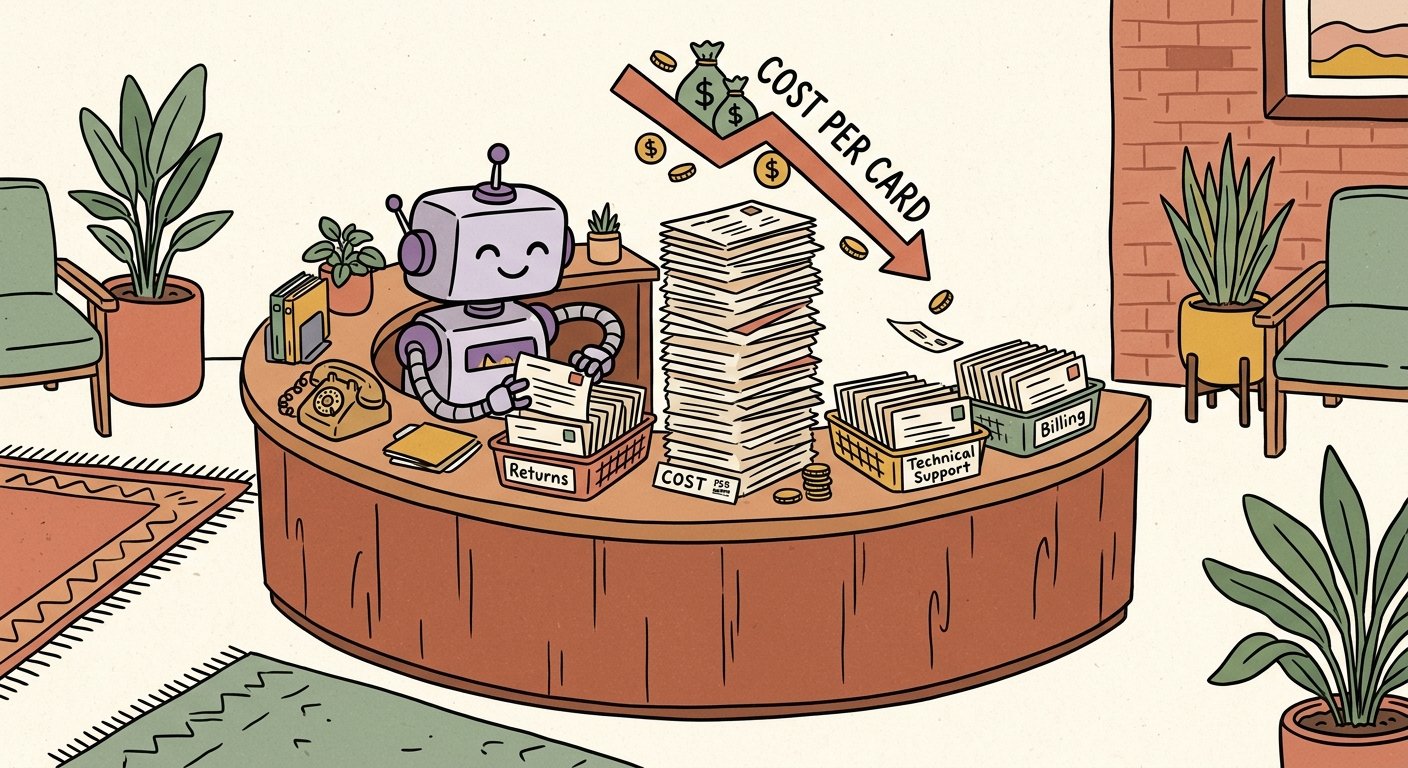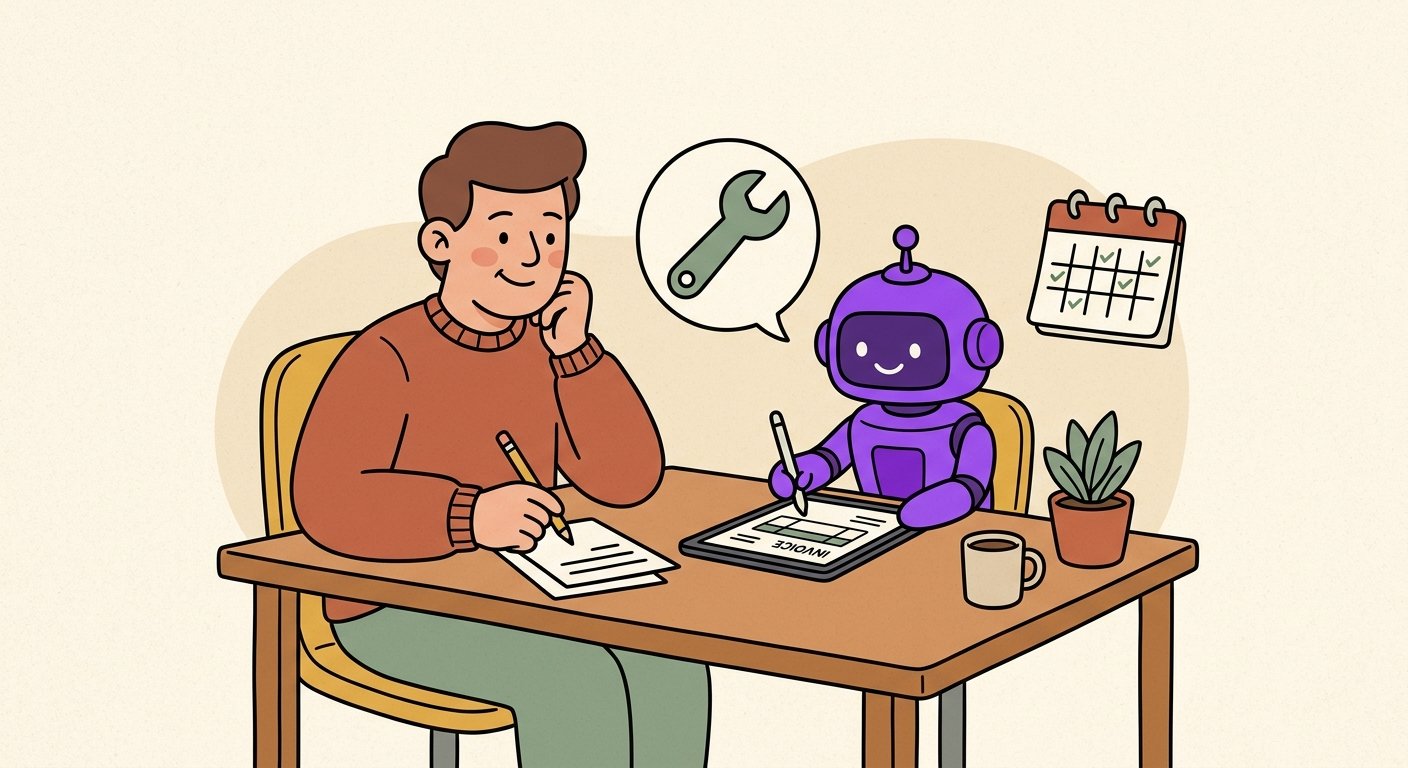
Vertical AI is moving from dashboards to doing the work: what an AI property manager shows operators
An AI property manager that chases rent and triages repairs shows where vertical AI is heading: assistants that do the admin, not just display it. What operators in any vertical should take from it.
The vertical assistant is graduating from dashboards to doing the work
Most software sold to a small business over the past decade promised visibility. It showed you the calendar, the inbox, the invoice queue, the list of overdue rent. Visibility was the product, and the operator stayed the engine: someone had to read the screen, decide, and act.
A newer class of tool skips that step. Dardaris, an AI property manager built for private landlords and small agencies, is a clean example. It does not merely display the admin. It performs it.
That distinction, showing versus doing, is the most useful line to draw when you evaluate AI for any vertical business. It is also where most of the value sits.
What an AI property manager actually handles
Strip the marketing away and the work is ordinary, unglamorous and constant. Rent requests and invoices go out. Payments are matched against the bank. Late rent is chased one polite step at a time. Repairs are triaged, with owner-side and tenant-side costs separated and quotes laid side by side. Tenants get answers by email, SMS or WhatsApp, in their own language. Leases, rent reviews and compliance deadlines are tracked against region-specific rules. Short-stay bookings across Airbnb, Booking and direct are kept on one calendar.
None of that is intellectually hard. All of it is time-consuming, and all of it is exactly the work a small operator cannot stop doing. The value is not in a clever answer. It is in the fact that the tasks happen without anyone having to remember them.
The autonomy dial is the part worth copying
The more interesting design decision is not what the assistant can do, but how much rope it gets. Dardaris hands the operator a dial. Every task can run in Auto, Notify or Review mode, with spending caps and quiet hours on top. Anything with consequences waits for approval, and every action is logged with its reasoning.
That is a mature way to ship automation into a business with real money and real tenancy rules at stake. The failure mode of most first-generation AI tools was all-or-nothing: either a chatbot that answered questions and changed nothing, or an automation that ran wild. A per-task dial lets an owner start with the low-risk work, watch the log, and widen the mandate as trust builds.
It also changes the shape of the software. You stop buying a system of record and start delegating a role. The morning briefing replaces the dashboard: instead of a wall of status, the operator gets the handful of decisions that genuinely need a human.
The economics are the argument
The vendor's own claim is a reduction from roughly 14 hours of monthly admin to about 40 minutes. Treat that number with the caution any vendor number deserves, but the direction is not controversial. Administrative load in small property operations is death by a thousand small tasks: a rent reminder here, a repair quote there, a compliance date nobody diarised.
The same arithmetic appears in every vertical where an assistant takes over inbound work. A clinic front desk answering the same twelve questions all day. A restaurant handling reservation requests after service. A home-services firm qualifying leads while the crew is on site. A storage facility fielding unit availability and access questions. The tasks are small, repetitive and interrupt-driven, which is precisely the profile where an always-on assistant pays for itself.
What generalises to other verticals
The property example is useful because it shows the pattern in a category most operators already understand.
- Start from the inbound. The assistant earns its keep by handling what already arrives, not by generating new demand.
- Do the admin, not the analysis. Sending, chasing, matching, triaging and logging are the work. Dashboards are a consolation prize.
- Keep the human on the exceptions. Approval gates and audit logs are what make delegation safe enough to actually use.
- Speak the customer's channel. Email, SMS and WhatsApp in the customer's own language beat a portal nobody logs into.
- Cover one vertical properly. A property manager is not a general assistant wearing a property costume. The rules, the deadlines and the vocabulary are the product.
That last point is why ready-made, vertical-specific assistants tend to beat build-your-own for small operators. A dental clinic, a spa, a storage facility and a tour operator do not share a workflow. They share a problem: inbound demand that arrives faster than a small team can answer it. Nextlify's catalog of 105 industry-specific assistant apps across roughly 95 verticals exists for exactly that gap, each one built to capture leads and book appointments on the business's own site and channels.
A short test before you buy anything
Run the pattern against your own operation before you evaluate a specific product. Count the inbound items that arrive in a week and get answered by hand. List the ones that follow the same script every time. Then estimate what an hour of that work costs you, including the enquiries that went unanswered while nobody was at the desk. If the total is more than a few hours a month, an assistant that handles the scripted share and escalates the rest is not a novelty. It is capacity you are already paying for twice: once in wages, and once in the leads that quietly walked away.
Where this stops short
Two caveats are worth stating plainly. First, region-specific compliance rules are only as good as their maintenance. A landlord in one jurisdiction and a landlord in another are running different businesses, and any tool that claims to cover both needs a visible update cadence. Second, delegation is a trust curve, not a switch. The dial only works if the logs are readable and the approvals are quick. An operator who cannot see why the assistant chased a tenant will turn the dial back to manual and never touch it again.
The pattern, though, is clear. Vertical AI is moving from answering questions to owning tasks, and the tools that win will be the ones that make the handover from human to assistant gradual, legible and reversible.
If you run a business where inbound demand outpaces the front desk, the question is no longer whether an assistant can help. It is which tasks you hand over first. Talk to us about Nextlify.
Conversational Patient Intake in Real Clinics: What The Lancet Study Teaches Practice Operators
The easiest AI wins are in the industries with the least tech