A €29-A-Month Tool Now Does the Marketing Chore No Store Owner Chose to Do
SlideFarm turns a Shopify catalogue into scheduled TikTok carousels for 29 euros a month. The interesting part is not the tool. It is what the buying decision looks like once content posting becomes a chore you can hand over.
The task nobody signed up for
Open most small e-commerce businesses' week and you will find the same item on the to-do list: post content. Not plan a campaign, not write a strategy. Post. A TikTok carousel here, a product highlight there, a three-slide "swipe to see the new arrivals" before the weekend. Store owners picked their niche because they liked the products or the trade, and somehow the weekly content chore came with the package.
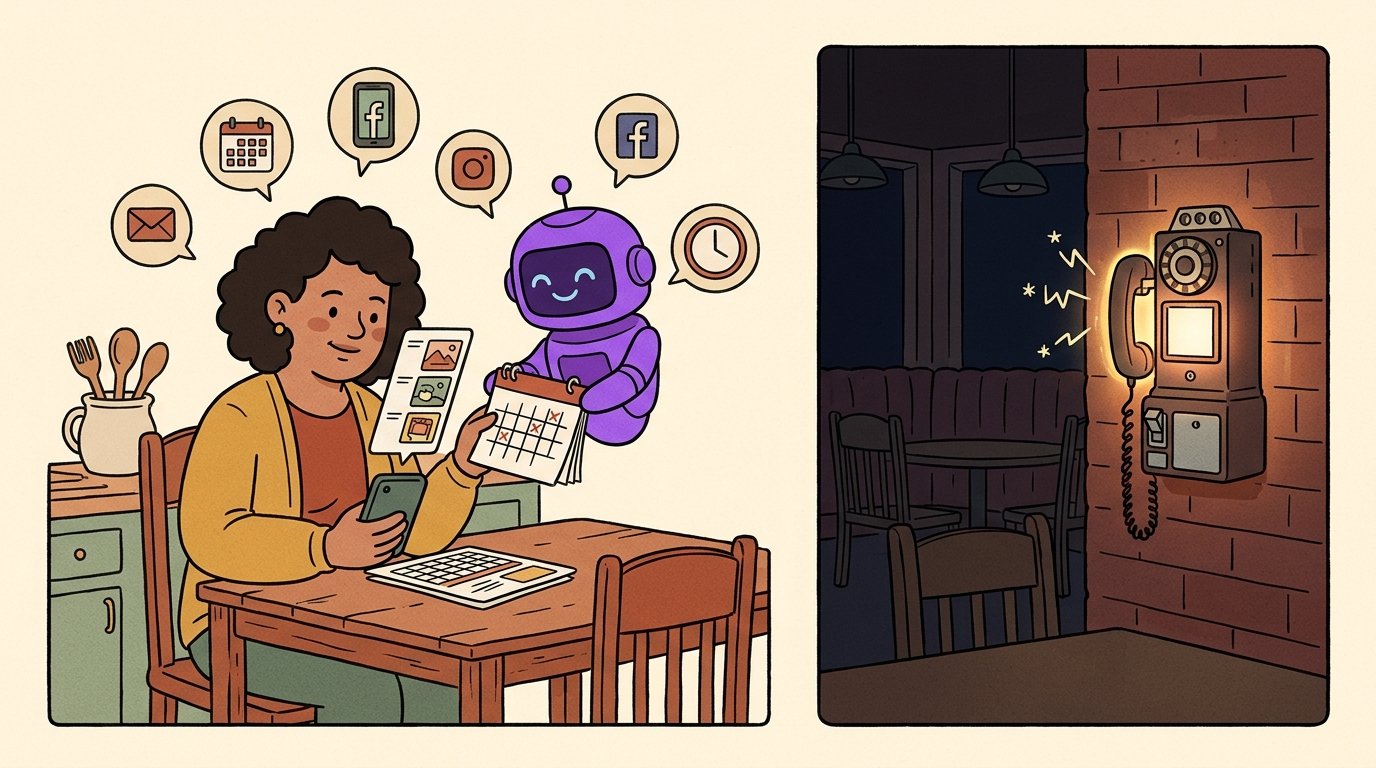
A tool that landed in this week's AI-feed digest makes that chore a useful case study. SlideFarm is a TikTok carousel generator built for Shopify stores. You paste your store address. The tool reads your products, their photos, their prices, and the way your brand talks. If your store runs on something other than Shopify, you upload product photos instead. From that, it writes and designs carousels built to sell those products.
The workflow details matter more than the pitch. Every generated carousel opens in an editor: you change the texts, the photos, the slide order, the caption. Nothing goes live until you place it on a day and a time in a calendar, and it posts to your connected TikTok account at that slot. Copy runs in English or French per brand. The first three carousels are free with no card, and paid plans start at €29 a month with no commitment.
Strip away the product category and look at what just happened to the work. A recurring task that used to eat an owner's Sunday evening, writing slides for twelve products and remembering to post them, is now a fifteen-minute review-and-schedule pass at a known monthly price.
Why this is an adoption story, not a gadget story
The interesting question is not whether AI can make a decent carousel. It can, unevenly, and the editor exists precisely because the operator knows that. The interesting question is what changed in the owner's decision calculus, because that same shift is now happening in every corner of a small business where there is a backlog of invisible repetitive work.
Three things moved.
The unit of purchase changed from capability to hours. Nobody buys a €29 carousel tool because they lack software that can place text on images. They buy it because the weekly hours came out of a thin schedule and the quality ceiling is acceptable once a human reviews the output. The price is measured against the chore, not against a designer's rate, and against the hours, not against a feature list.
Trust got engineered into the workflow rather than demanded from the brand. The tool never posts on its own. The owner edits, approves, schedules. That design is a statement about who is scared of what: the merchant is not scared of AI writing bad copy, they are scared of AI publishing bad copy under their brand name at 2 a.m. Anything that puts a review gate between generation and publication clears the actual blocker.
The economics became per-unit-visible. Three free carousels, then a flat €29, no contract. An owner can compute the trade in one line: roughly four hours of weekly work for less than the cost of one hour of most consultants. When a decision is that legible, adoption stops being a technology debate and starts being arithmetic.
If you run any operation with a content or admin backlog, the useful move is to inventory the chores the same way. Which tasks happen every week, follow a visible format, tolerate "good enough" on first draft, and have a human willing to check the output before it ships? Those are the automatable ones. Everything that needs judgment at every step is not on that list yet, and pretending otherwise is how businesses burn a quarter on experiments that never ship.
The chore that costs more than posting
Here is the part worth reading carefully if you own a local service business rather than a Shopify store. Content posting is an expensive chore in hours, but it is cheap in lost revenue. A missed product carousel costs you maybe a few views.
There is a second backlog in nearly every service business, and every item in it carries a real price tag. A parent calls at 8:40 p.m. to book a table and gets voicemail. A prospect asks on the website whether you take walk-ins and closes the tab when nobody answers. A regular message on Instagram at the exact hour you are mid-shift, about rescheduling, and it goes unread until Tuesday.
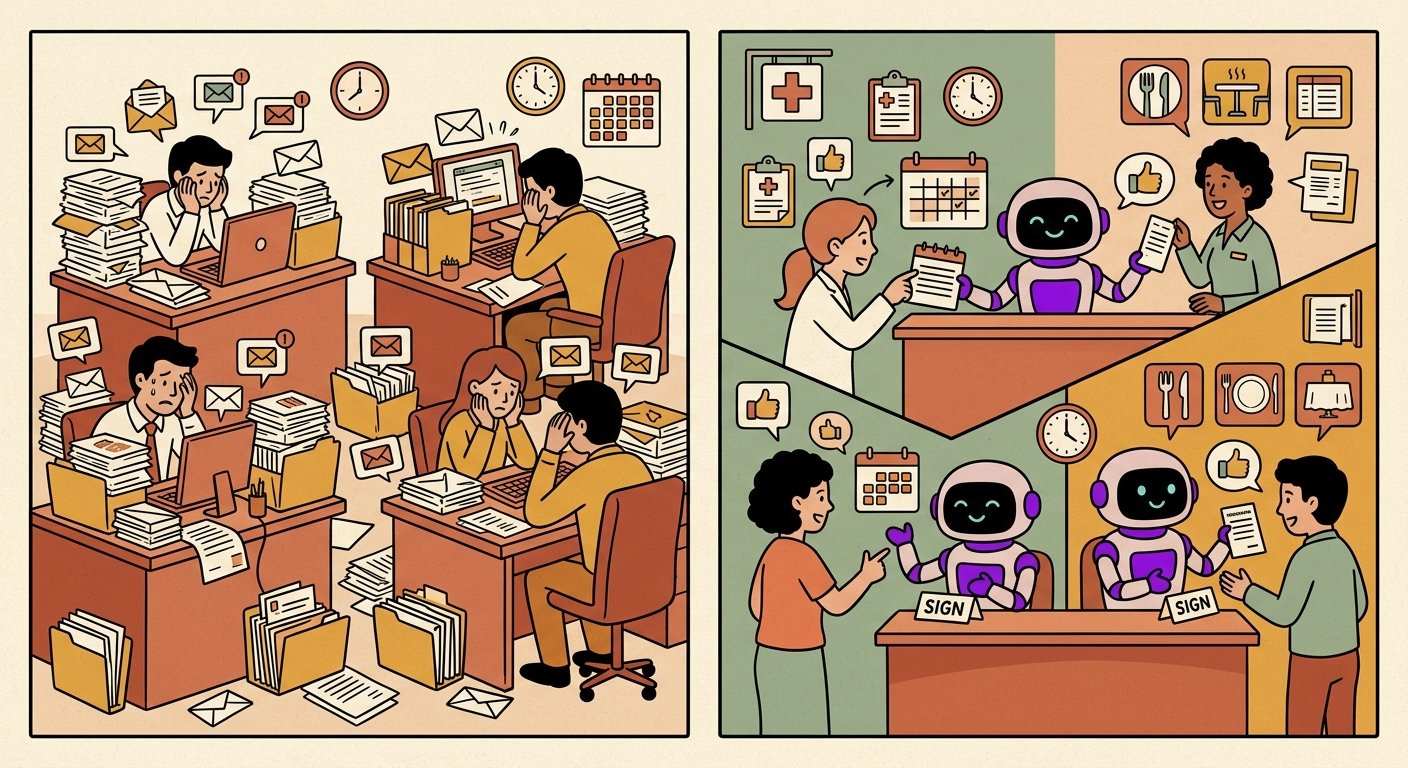
Unlike the carousel chore, this one is invisible in your numbers because you cannot see the appointment that never happened. The task is answering inbound, capturing the details, and booking the slot. For years the only solution was hiring a front desk, and a front desk does not answer at 2 a.m. or scale across six message channels.
This is the lane Nextlify works in: ready-made AI assistant apps built per industry, covering roughly ninety-five verticals, each one doing a narrow job. Dento handles the questions a dental clinic gets all day. SpaSlot runs the enquiries for a spa. Gudalis works the phone and chat traffic of a restaurant. FitLead captures and books for a gym. Each app answers inbound questions on the business's own website and messaging channels, captures lead details, books appointments and reservations, and follows up, around the clock.
The promise rhymes with the carousel tool's, and that rhyme is the whole point of this piece. Both convert work you already pay for, badly, in your own evenings. The SlideFarm owner did not get new traffic; they stopped losing hours on the posting chore. A clinic using an always-on assistant does not get new demand; it stops leaking the enquiries that were already arriving. Nextlify's pitch is exactly this conversion of traffic the business already has, turning website visitors and inbound messages into booked appointments.
What it looks like operationally
The adoption pattern repeats in both cases, so it is worth naming.
- A known, bounded task. Not "transform marketing," not "reinvent the front office." One chore with a visible format.
- A review gate. The human approves before anything is published or promised to a customer. Trust is built into the pipeline rather than requested.
- A legible price. Flat, monthly, no contract, computable in one line against the hours it returns.
Notice what is absent: none of this requires the owner to become technical, hire anyone, or run a pilot programme. The buy is contact and arithmetic, not a project plan.
The chore that used to hide in your week now has a price and an owner. That is the real shift, and it keeps moving outward from content tools into anything with a queue.
Start with the expensive chore
If you run a store, the carousel tool is a fine first experiment. Low risk, visible output, a month of €29 to learn what automated production actually feels like inside your brand voice.
If you run a local service business, do the inventory exercise above and be honest about which of your chores actually costs revenue. For most clinics, spas, restaurants and gyms, it is not the posting. It is the unanswered phone.
Talk to us about Nextlify. We will show you which app fits your vertical and what the inbound traffic you already have can convert to when nothing waits until morning.

The last unautomated channel: what an AI receptionist changes for a local business

The 24/7 AI Receptionist: Why Local Service Businesses Are Replacing Voicemail with Automated Booking