How AI automations and agentic AI work
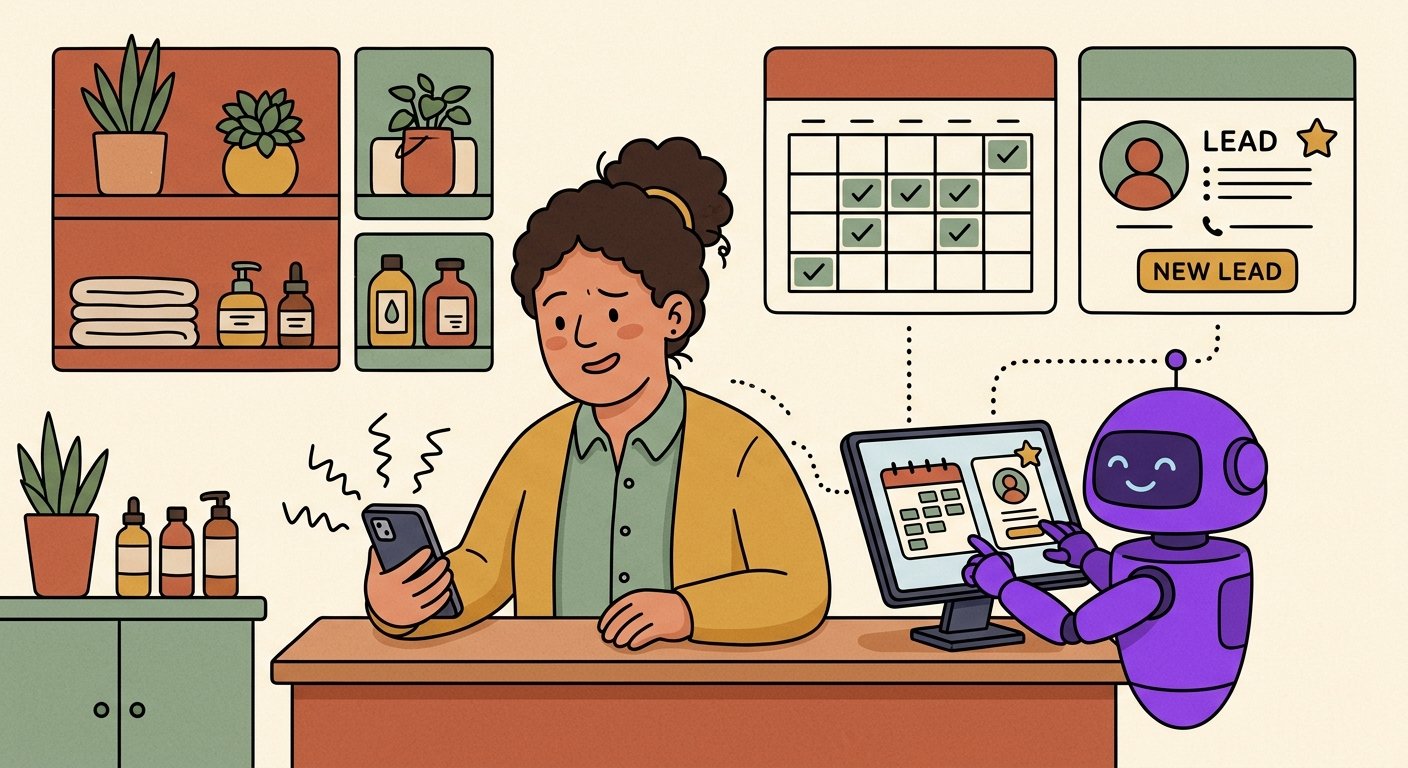
AI automation follows rules. Agentic AI can plan steps, call tools, use memory, and decide what to do next within limits set by the business.
AI automation and agentic AI are often talked about as if they are the same thing. They are related, but they are not identical.
A normal automation follows a predefined path. If this happens, do that. A form is submitted, so send an email. A payment succeeds, so create an invoice. A booking is made, so send a reminder.
Agentic AI is more flexible. It can look at a goal, inspect the available information, choose a tool, take an action, read the result, and decide the next step. It still needs boundaries. It still needs human design. But it can handle situations that do not fit a simple rule tree.
That is why businesses are paying attention.
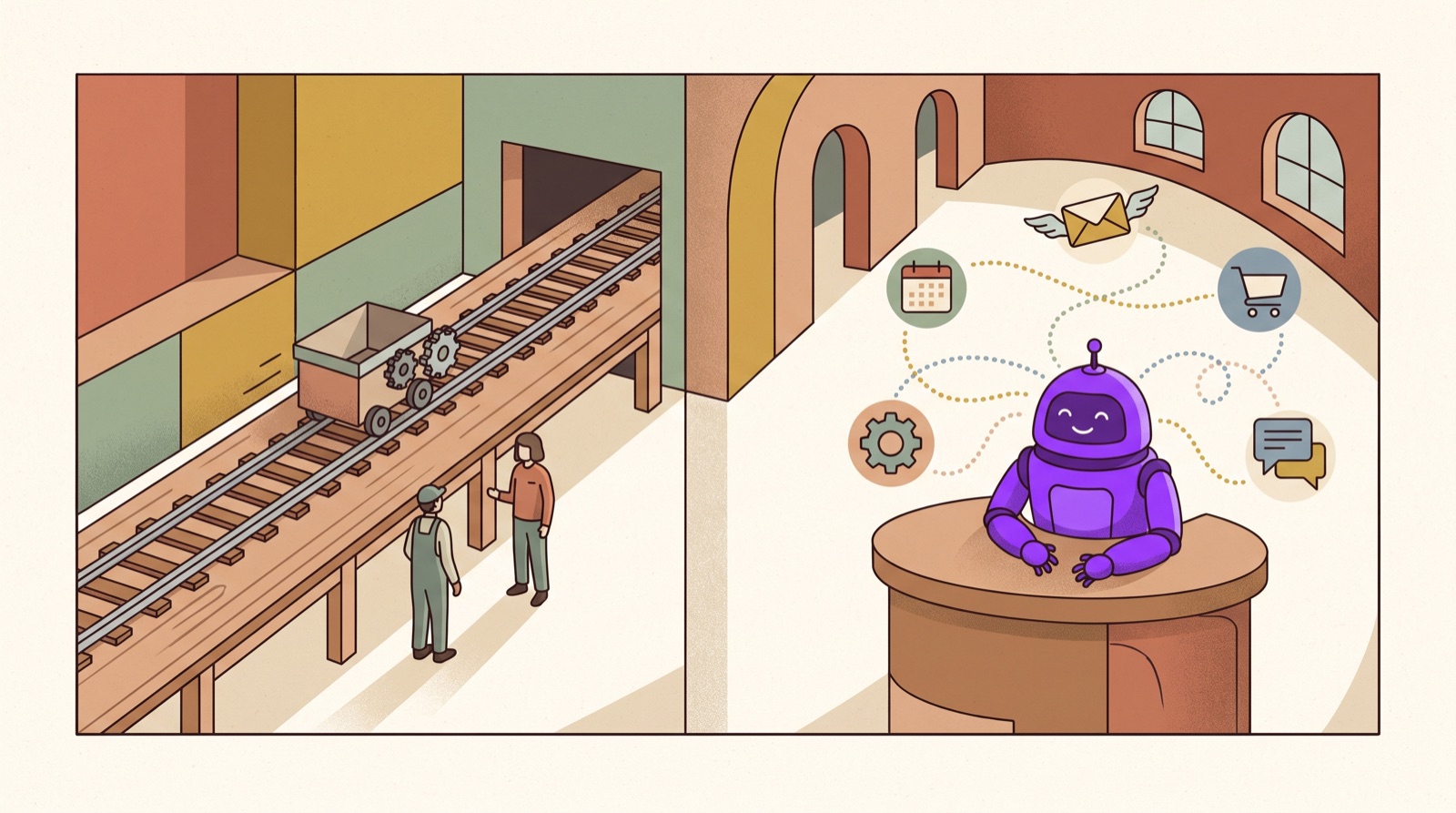
Traditional automation is like a train track
A workflow automation is useful when the path is predictable.
For example:
- A customer fills out a contact form.
- The system sends a confirmation email.
- The lead is added to the CRM.
- A task is assigned to a salesperson.
This is reliable because each step is known in advance. The automation does not need to understand much. It only needs to move data from one place to another and trigger the next action.
That kind of automation is still valuable. In fact, many businesses should fix these basics before adding AI. If a company cannot reliably capture a lead, an AI agent will not save the process.
Agentic AI is more like a trained assistant
IBM defines an AI agent as a system that can autonomously perform tasks by designing workflows with available tools. That definition is useful because it points to the two important parts: autonomy and tools.
An agent does not only produce text. It can use tools.
A sales agent might:
- Read the customer's message
- Search the product catalog
- Check stock
- Ask a follow up question
- Build an order
- Send a payment link
- Notify the business if something is unusual
A booking agent might:
- Understand the requested service
- Check staff availability
- Suggest time slots
- Confirm the appointment
- Send reminders
- Reschedule if the customer asks
The agent is not magic. It is a controlled loop: observe, reason, act, check result, continue or stop.
The basic parts of an AI agent
A practical business AI agent usually has these components.
A goal
The goal tells the agent what job it is doing. "Sell products" is too broad. "Answer product questions, recommend items from inventory, collect order details, and hand off refund requests" is much better.
Knowledge
The agent needs approved information. This may include FAQs, policies, product catalogs, service descriptions, prices, documents, and past conversations. Without trusted knowledge, the agent will guess. Guessing is dangerous in business.
Tools
Tools let the agent do work. A tool might search inventory, create a booking, send an email, update a CRM record, generate a quote, or start a payment checkout.
Tool access should be limited. The agent should only have the permissions it needs for the job.
Memory
Memory helps the agent keep context. It may remember what the customer asked earlier in the conversation, what product they viewed, or what information was already collected.
Longer term memory needs more care. Businesses should decide what the agent can store, for how long, and under which privacy rules.
Rules and handoff
The agent needs stop signs. It should know when to ask a human, when to refuse an action, and when to say it does not know.
Good handoff rules make agentic AI safer and more useful. They also make the customer experience better because the customer does not get trapped in a bot loop.
Where AI automation ends and agentic AI begins
A simple automation says: if invoice is overdue by seven days, send reminder.
An AI agent can do more: read the customer history, notice that this is a VIP account, draft a softer reminder, check whether there is an open support issue, and ask a human to approve before sending.
That extra judgment is the point. The agent can adapt the workflow based on context.
Still, not every workflow needs an agent. If the rule is stable, use normal automation. It is cheaper, easier to test, and less likely to surprise you. Use agentic AI when the task involves language, messy inputs, changing context, or decisions that need several steps.
Why SMEs should care
Small businesses have many processes that are too messy for classic automation but too repetitive for humans to keep doing manually.
Customer conversations are the obvious example. People do not write messages in neat database fields. They ask half questions, change their mind, send photos, mix languages, and skip details. A rule based bot breaks quickly.
An AI agent can handle that mess better. It can ask for missing information, interpret intent, and connect the conversation to the right action.
This is why agentic AI fits sales, support, booking, onboarding, property search, clinic intake, and service scheduling. These workflows are structured enough to automate, but human enough to need language understanding.
A safe way to build an AI agent
Start narrow.
Pick one workflow with clear value. Write down the current process. Define what the agent is allowed to do. Connect only the tools it needs. Test with real examples. Review failures. Improve the knowledge base. Add handoff rules. Then expand.
A good first agent should have a job description that fits on one page.
For example:
"This agent answers questions about our products, checks inventory, collects order details, and sends customers to checkout. It does not approve refunds, change prices, promise delivery dates outside policy, or answer legal questions. It hands off those cases to a human."
That is boring in the best way. Boring agents are easier to trust.
The future is systems, not prompts
The early AI wave made people think the prompt was the product. Agentic AI changes that. The product is the system around the model: data, tools, permissions, logs, monitoring, and human review.
The model is the brain, but the business process is the body.
Companies that understand this will get better results. They will not ask one giant AI to "run the business." They will create specific agents for specific jobs and connect them to real tools.
That is how AI automation becomes useful. Not by sounding smart, but by finishing work.
Sources: IBM "What are AI agents?", IBM "What is agentic AI?", Stanford HAI 2025 AI Index Report, Nextlify SalesBot page.
Conversational Patient Intake in Real Clinics: What The Lancet Study Teaches Practice Operators
Vertical AI is moving from dashboards to doing the work: what an AI property manager shows operators