How business AI agents will change small business life
AI agents will not make small businesses look like enterprises. They will give owners a reliable extra pair of hands for sales, admin, follow up, and routine operations.
Small business owners do not usually wake up thinking about AI strategy. They wake up thinking about the missed call from last night, the customer who asked the same pricing question again, the booking that needs to be moved, the invoice that has not been paid, and the employee who is off sick on the busiest day of the week.
That is why AI agents matter.
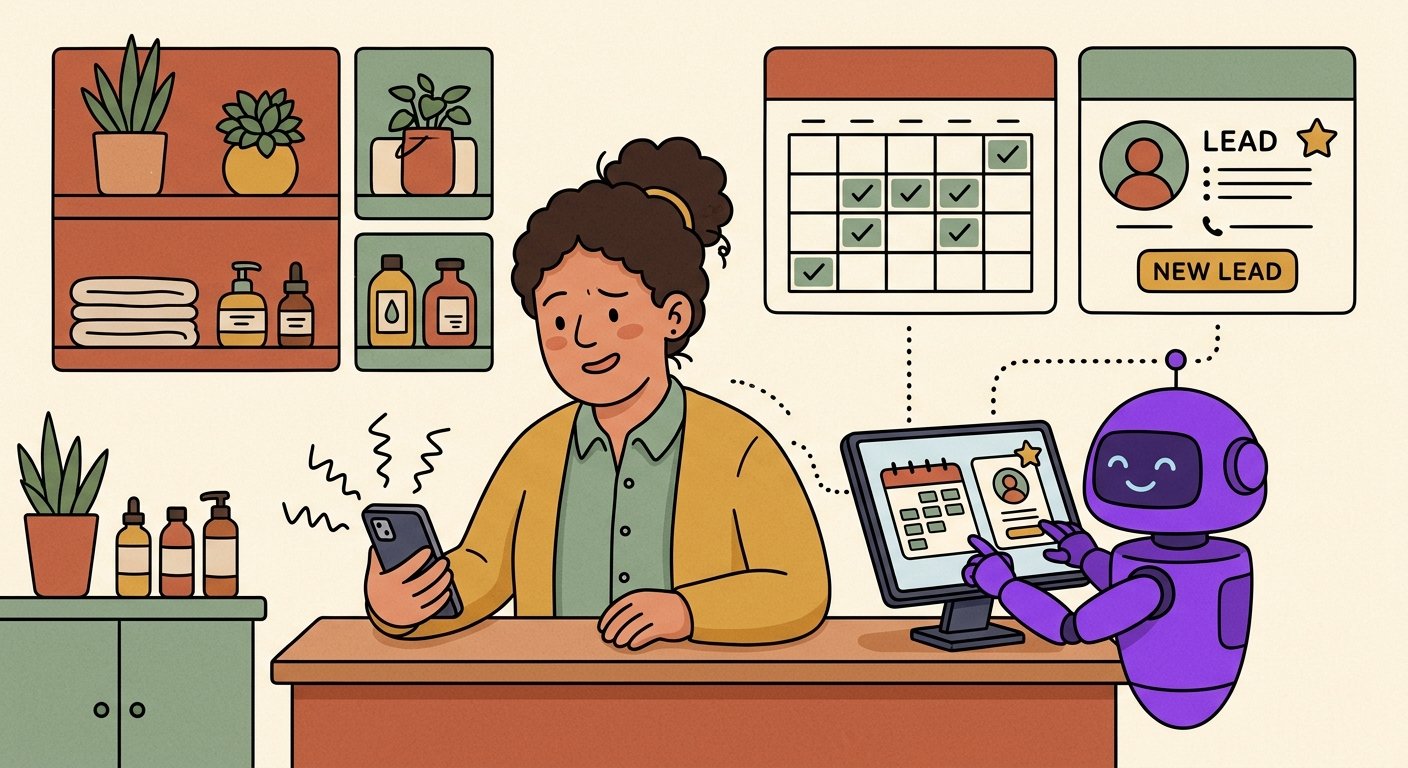
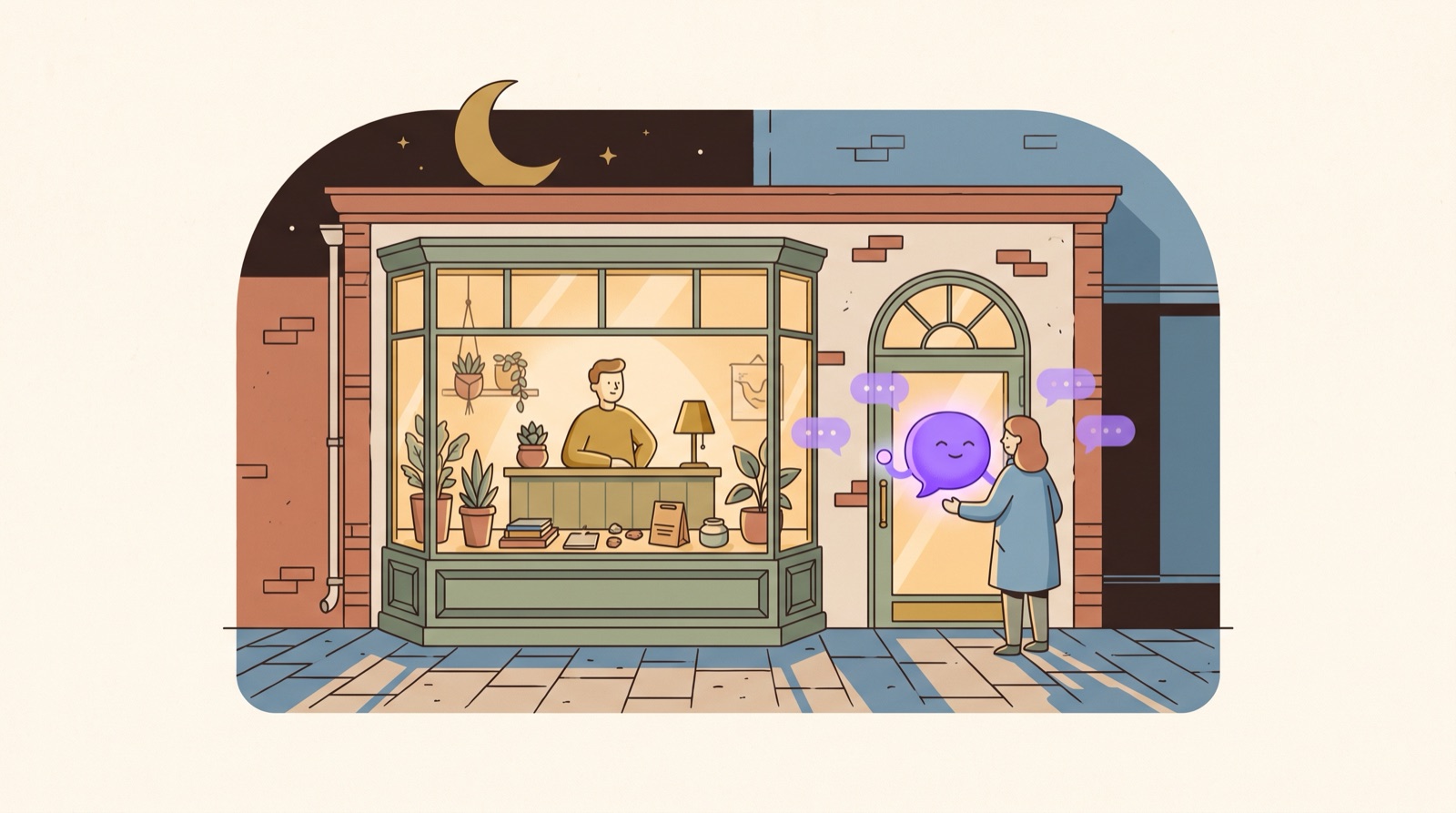
The first useful wave of business AI for small companies will not be glamorous. It will not look like a robot CEO or a magical consultant in a browser tab. It will look more like a patient assistant that answers customers at 11:43pm, checks the calendar before offering a time slot, reminds someone about an appointment, writes a clean summary for the owner, and keeps doing the boring parts without complaining.
For many SMEs, that is already a big change.
The problem is not ambition. It is bandwidth.
Small businesses are full of unfinished systems. The owner knows how the business should run, but the process lives in their head. A receptionist knows the best answer to common questions, but only during working hours. A sales rep remembers to follow up with a warm lead, unless three urgent things happen first. A clinic has a booking flow, a WhatsApp inbox, a spreadsheet, a payment link, and a staff member trying to hold it all together.
Large companies solve this with departments. Small companies solve it with heroic effort.
AI agents give SMEs a third option. The business can describe a task once, connect the tools it already uses, and let the agent handle the repeatable parts. Not every task. Not the sensitive judgment calls. But enough of the daily noise that people can breathe again.
The adoption curve is moving fast. Stanford's 2025 AI Index reported that 78% of organizations used AI in 2024, up from 55% the year before. That number includes large organizations, but the direction is what matters for SMEs. AI is moving from experiment to ordinary business software.
What changes first
The first changes will show up in the places where customers already expect speed.
A hotel guest asks whether late check in is possible. A dental patient wants to move an appointment. A gym lead asks about pricing after seeing an Instagram ad. A law office prospect wants to know what documents are needed before a consultation. A real estate buyer asks for three properties near a school and under a certain budget.
These are not hard questions for the business. They are hard to answer consistently, across every channel, at every hour.
An AI agent can sit between the customer and the business systems. It can answer from approved information, ask follow up questions, check stock or availability, push the lead into a CRM, and alert a human when the conversation needs judgment. The owner gets fewer interruptions, but the customer gets a faster answer.
That is the real benefit. Not "AI transformation." Fewer dropped balls.
The new small business stack
Most small businesses already have software. They have a website, email, spreadsheets, WhatsApp, maybe a booking tool, maybe Shopify or WooCommerce, maybe a CRM that half the team uses.
AI agents become useful when they work across that messy stack instead of asking the company to replace it.
A practical agent needs four things:
- A clear job, such as answer product questions, qualify leads, schedule bookings, or follow up after a quote.
- A trusted knowledge base, such as product data, policies, services, prices, FAQs, and customer records.
- Tool access, such as calendar, inventory, CRM, payment, email, WhatsApp, or helpdesk actions.
- Escalation rules, so it knows when to stop and bring in a person.
This is where small business AI gets interesting. The agent is not just writing text. It is doing work inside the business.
Owners will feel the change in time, not dashboards
The pitch for AI often talks about productivity, but small business owners usually measure improvement in a more practical way.
Did we answer the lead before a competitor did? Did fewer customers call to ask where their order is? Did the front desk get through the morning without drowning? Did the owner finally stop handling routine messages during dinner?
That is the life change.
AI agents will not remove the human side of small business. In many cases they will protect it. Staff can spend less time repeating the same answer and more time with the customers who need care, persuasion, reassurance, or taste. The owner can see what is happening without manually chasing every thread.
The risk is pretending the agent is smarter than it is
A business AI agent should be treated like a new employee with perfect patience and limited judgment. It needs training, permissions, examples, boundaries, and review.
Bad implementations fail because they are too vague. "Help my customers" is not a job. "Answer questions about our services, collect name and phone number, suggest available consultation slots, and hand off legal advice questions to a human" is a job.
The best SMEs will not buy AI because it sounds modern. They will buy it because a specific workflow hurts.
That is also how they should judge it. Pick one pain point. Automate it. Measure the difference. Then expand.
What small businesses should automate first
Start close to revenue or customer experience. That usually means:
- Lead capture and qualification
- Appointment reminders and rescheduling
- Product questions and order support
- Quote follow up
- Review requests after service
- Simple customer onboarding
- Internal summaries after customer conversations
Avoid starting with vague back office dreams. If nobody can describe the current process, the agent will not fix it. Write the process down first, even roughly.
The small business advantage
Small businesses have one advantage large companies often lack: they can change fast. There are fewer committees. The owner knows the real bottlenecks. A working agent can be tested in days, not months.
That is why AI agents may help SMEs more than anyone expects. They do not need to become tech companies. They need to stop losing time to repetitive work.
The small businesses that win with AI will not be the ones with the biggest budgets. They will be the ones that give agents narrow, useful jobs and keep improving them based on real conversations.
Sources: Stanford HAI 2025 AI Index Report, IBM "What are AI agents?", Nextlify product and ICP notes.
Conversational Patient Intake in Real Clinics: What The Lancet Study Teaches Practice Operators
Vertical AI is moving from dashboards to doing the work: what an AI property manager shows operators