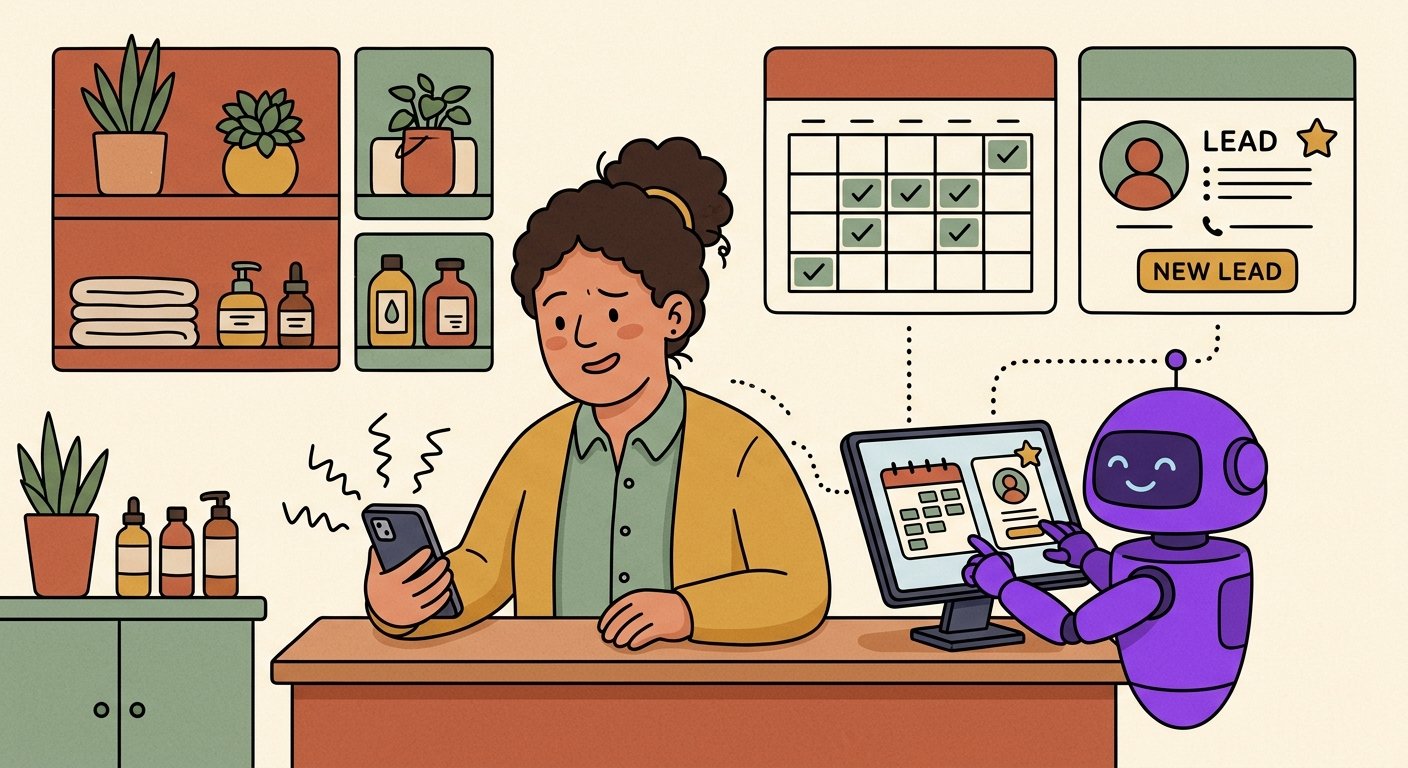
Real estate agencies are early AI pioneers among SMEs
Real estate agencies are a natural fit for AI because their work is lead heavy, data heavy, image heavy, and full of repeated customer questions.
Real estate agencies are one of the clearest places to see why small businesses adopt AI.
The work is personal, but much of the workflow is repetitive. Buyers ask for the same filters. Renters ask whether a listing is still available. Sellers want updates. Leads come from portals, websites, WhatsApp, Instagram, referrals, and walk ins. Agents spend a large part of the day matching people to properties, replying quickly, scheduling viewings, and trying not to lose the good prospects in a messy inbox.
That is exactly the kind of environment where AI agents become useful.
Real estate is also unusually ready for AI because the industry already runs on structured and semi structured data: listings, prices, neighborhoods, bedrooms, amenities, availability, photos, documents, and appointment slots. An AI agent does not need to invent the business. It needs to search, filter, explain, qualify, and hand off.
Real estate has always been a technology adopter
Real estate agencies may look traditional from the outside, but the modern agency already uses a heavy technology stack. Property portals, CRM systems, e-signatures, digital contracts, online advertising, virtual tours, map search, photo editing, and automated alerts are normal parts of the job.
That history matters. AI is not arriving in a blank market. It is arriving in an industry that already accepts tools when they help agents respond faster and market properties better.
The next step is not hard to imagine. If a portal can show listings, an AI assistant can discuss them. If a CRM can store leads, an AI assistant can qualify them. If a calendar can hold viewings, an AI assistant can suggest times and confirm appointments.
The lead problem is brutal
Real estate leads decay quickly. A buyer who asks about an apartment may contact three agencies in the same hour. The agency that replies first, with useful options, has a serious advantage.
This is where AI helps without pretending to replace the agent.
An AI property assistant can ask the right questions:
- Budget
- Preferred location
- Move in date
- Number of bedrooms
- Must have amenities
- Financing or cash purchase
- Viewing availability
It can then search the agency inventory and show a short list instead of dumping every possible listing on the customer. On WhatsApp, it can send a concise set of options. On a website, it can show richer cards with images and details.
The human agent still handles persuasion, negotiation, seller management, and the emotional parts of the deal. The AI handles the first pass, which is where many agencies lose time.
Property search is a natural AI use case
Traditional property search asks the user to know the filters before they know the market. That is not how people talk.
A buyer may say, "I want something near a good school, not too far from the metro, with a balcony, and I can stretch the budget if the building is new." A normal filter form struggles with that. An AI search flow can translate it into structured criteria, run the search, and ask a follow up question if the request is too broad.
This is why semantic search matters. It can connect natural language requests to listings even when the exact words do not match. A listing may say "covered terrace" while the buyer asks for "balcony." A listing may mention "family friendly compound" while the customer asks for "safe for kids."
For agencies, this means fewer missed matches.
AI makes small agencies look more responsive
Large agencies can assign staff to portals, phones, WhatsApp, and viewing coordination. Smaller agencies often cannot. The owner or senior agent becomes the bottleneck.
An AI assistant changes the surface area of the business. The agency can answer after hours, collect lead details, suggest properties, and keep conversations organized even with a small team.
This does not make the agency less human. It makes the human work more focused.
Instead of asking every prospect the same basic questions, agents can start with a clean summary: what the buyer wants, which listings were shown, what they liked, what they rejected, and when they are available.
That is a better use of the agent's time.
The best real estate AI will be practical, not flashy
The most useful systems will do ordinary things well:
- Answer listing availability questions
- Recommend matching properties
- Capture buyer and renter requirements
- Schedule viewings
- Send reminders
- Summarize conversations for agents
- Follow up with similar listings
- Re engage old leads when new inventory appears
The flashy version of AI writes dramatic property descriptions. That can help, but it is not the main prize. The main prize is a faster, cleaner path from inquiry to viewing.
Why real estate agencies can lead other SMEs
Real estate has four traits that make it a strong AI pioneer among SMEs.
First, lead value is high. Saving one serious buyer can pay for the tool.
Second, speed matters. A late reply can lose the deal.
Third, data is available. Listings already exist in databases, spreadsheets, portals, and CRMs.
Fourth, the work has a clear human handoff. AI can qualify and recommend, while licensed professionals handle advice, negotiation, and closing.
That balance is important. AI works best in SMEs when it supports a clear workflow instead of trying to swallow the whole business.
What agencies should do now
A real estate agency does not need to automate everything at once. A good starting point is one workflow: inbound buyer inquiries.
Clean the listing data. Define the qualification questions. Decide when the AI should hand off. Connect the website or WhatsApp channel. Review the conversations every week and improve the answers.
Once that works, expand into seller intake, viewing reminders, lead nurturing, and post viewing follow up.
Real estate agencies that use AI well will not feel less personal. They will feel faster, more organized, and easier to buy from.
For an industry where timing and trust decide so much, that is enough to make AI adoption move early.
Sources: Nextlify real estate and property search planning notes, IBM "What are AI agents?", Stanford HAI 2025 AI Index Report.

Conversational Patient Intake in Real Clinics: What The Lancet Study Teaches Practice Operators

Vertical AI is moving from dashboards to doing the work: what an AI property manager shows operators