Faster, cheaper model calls: what Flash-Lite changes for inbound AI
As fast-tier models compress cost and throughput climbs, the unit economics of running AI on inbound traffic shift. Here is the math for operators and where the new economics show up first.
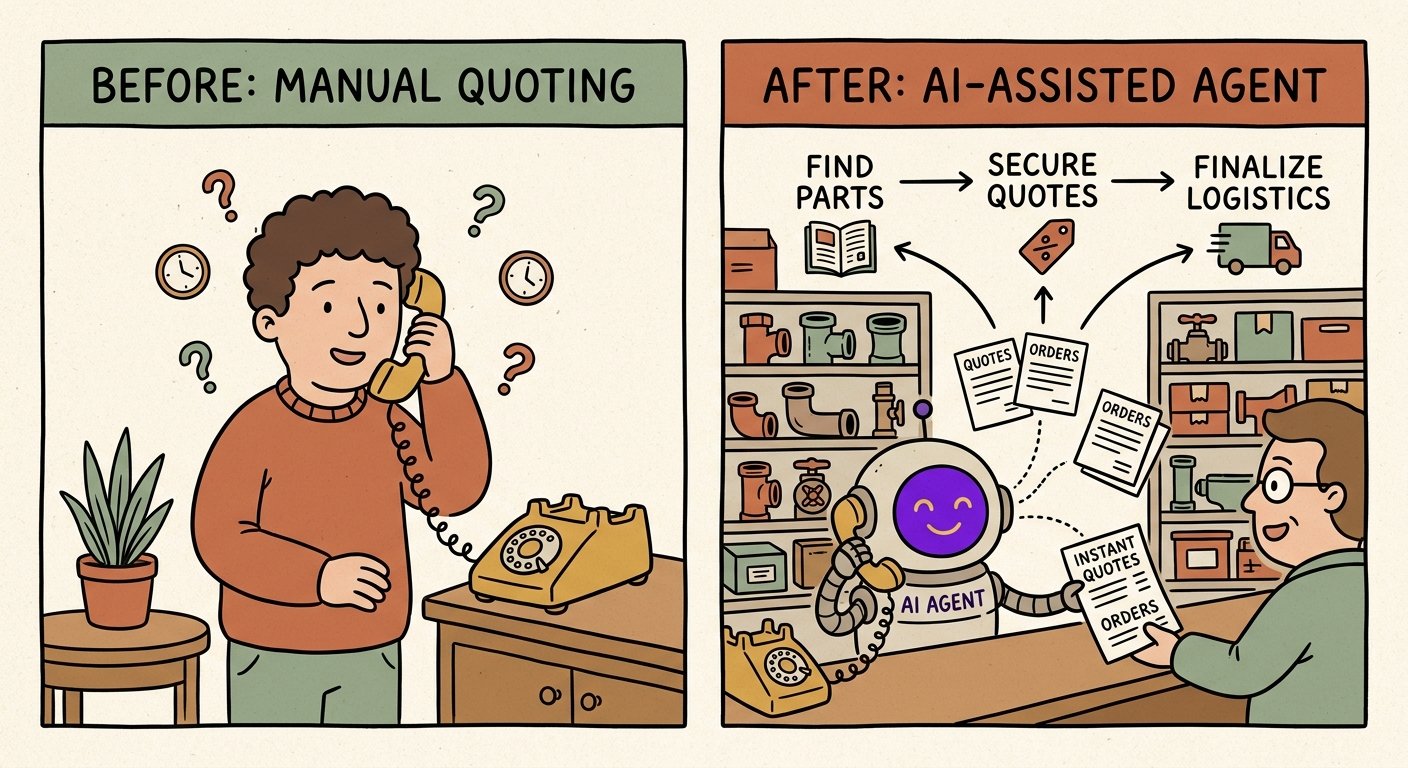
Every business running AI on inbound traffic eventually hits the same wall: the model that handles a single conversation well costs too much when you multiply it by tens of thousands of conversations a month. That arithmetic is the real reason most "24/7 AI assistant" rollouts stall out — not capability, cost per resolved conversation.
Google DeepMind's release of Gemini 3.5 Flash-Lite, announced this week, is the latest data point in a clear trend: the fast-tier model is getting dramatically cheaper while the gap between fast and standard tiers keeps narrowing. For any business running high-volume inbound operations, that is worth more than another model leaderboard win.
What is actually shifting
Flash-Lite is not positioned as the smartest model in the lineup. It is positioned as the model you reach for when call volume is high and per-call economics matter more than peak reasoning quality. Two things matter for operators:
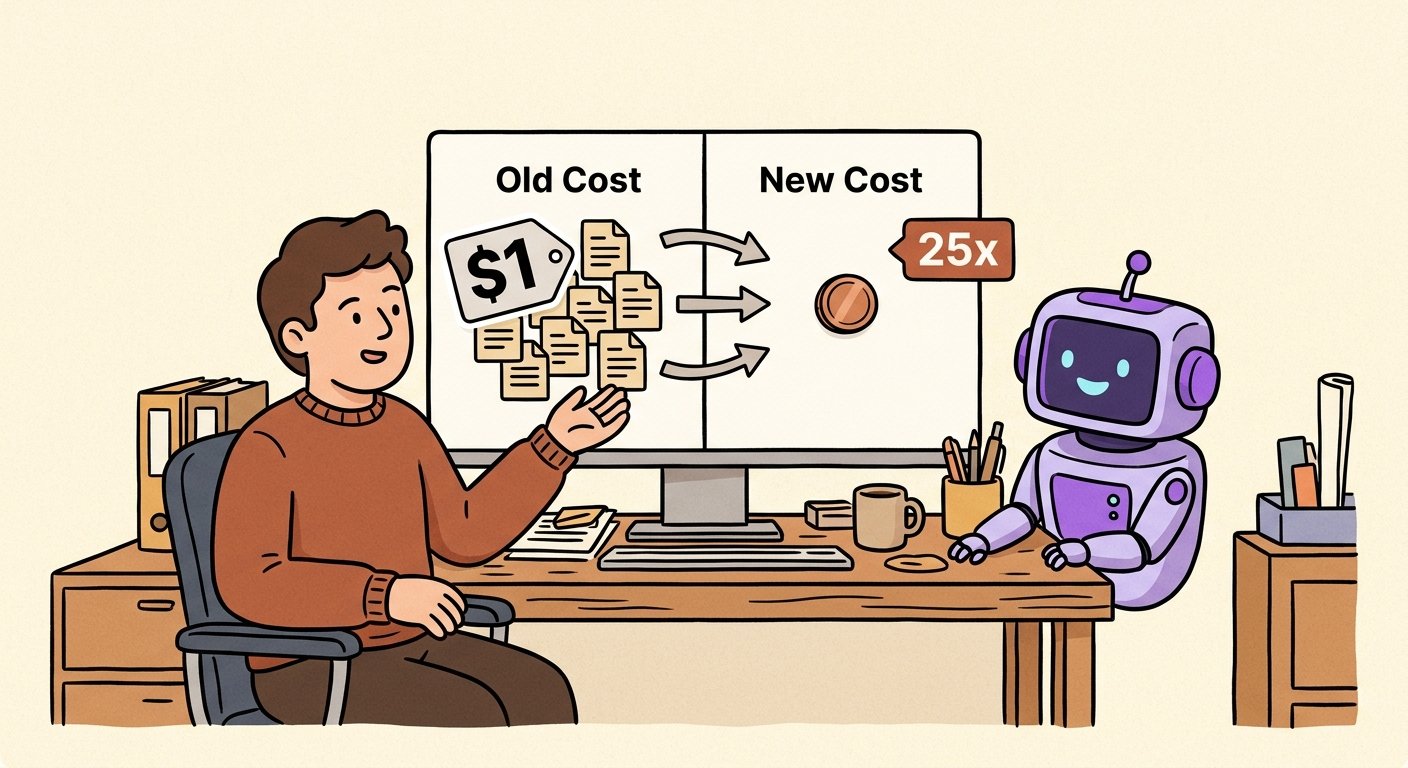
- Per-token cost. Fast-tier models have historically sat at a meaningful discount to standard tiers — usually five to ten times cheaper per token. Flash-Lite compresses that further, which compounds at scale.
- Throughput. Faster inference means the same infrastructure handles more concurrent conversations. For a business seeing five thousand inbound conversations a day, a thirty percent throughput improvement is the difference between hiring more humans to babysit the queue and not.
The use cases Google DeepMind highlighted — sorting tickets, extracting structured data from inbound messages — are the exact patterns that show up in real-world business operations: a clinic triaging appointment requests, a law firm pulling client details from a web form, a restaurant confirming reservation details from a phone-call transcript.
The math for an inbound-heavy business
Take a single industry vertical — say, a multi-location dental group. They take eight hundred inbound conversations a day across phone callbacks, web chat, and form submissions. About seventy percent are appointment requests that need to be categorized, scheduled, and confirmed. The other thirty percent need an actual human — clinical questions, billing disputes, emergencies.
If the AI handles the seventy percent at a per-conversation cost of four cents, that is thirty-two dollars a day, just under a thousand dollars a month. At one cent a conversation, it is closer to two hundred and fifty dollars a month. That delta funds a part-time front-desk hire. Multiply across a hundred and five industry verticals and the savings are not theoretical — they are the difference between an AI assistant being "a nice experiment" and "the reason we did not need to staff up this quarter."
This is why the fast-tier cost curve matters more than the leaderboard. Operators do not choose between the smartest model and the second-smartest. They choose between deploying AI on their real inbound volume or not deploying it at all.
What this means for businesses sitting on inbound traffic
Three patterns are worth watching:
1. Cost compression widens the addressable use case. Two years ago, the only AI calls worth making were the ones that replaced a thirty-dollar-an-hour human task. Today, a five-dollar-an-hour task is in scope. Tomorrow, two-dollar-an-hour tasks are. The shape of what gets automated follows the cost curve, not the other way around.
2. Throughput changes the deployment shape. When a single inference server can handle three times the concurrent conversations, the deployment stops looking like a queue and starts looking like a real-time layer. The shift from batch-style processing to always-on handling is what makes "24/7" a literal claim rather than a marketing line.
3. The fast-tier model becomes the default for the long tail. Most inbound conversations do not need frontier reasoning. They need accurate extraction, polite routing, and a clean handoff when the request gets weird. Fast-tier models at this price point are the right tool for that eighty percent of traffic.
A practical filter for operators
Before chasing the cost curve, three quick checks tell you whether inbound AI is even your bottleneck:
- What percentage of inbound traffic does a human handle today? If it is under thirty percent, the volume itself may not justify AI yet — fix the funnel first.
- What is the average handling time per inbound conversation? If it is under two minutes, the per-conversation savings are small and the case for AI is weak. If it is over five minutes, the math flips and the labor cost becomes the dominant line item.
- What does a missed inbound cost you? For a business where thirty percent of inquiries convert to a booked appointment, every dropped call is a measurable revenue loss. That is the number that justifies the deployment, and it is also the number that frames every cost-of-AI calculation you run.
If the filter says yes on all three, then the cost curve matters today. If it says no on any of them, the model release is interesting context, not a procurement signal.
What this does not change
It is worth being clear about the limit. A faster, cheaper model is not a substitute for industry-specific design. The same announcement that compresses cost also widens the gap between "an AI that handles inbound" and "an AI that handles inbound for a dental office and knows the difference between a cleaning appointment and an emergency root canal." Generic fast models can route and extract, but the booking logic, the escalation rules, the follow-up cadence — those still have to be designed for the specific business.
This is the part of the inbound AI stack that does not show up in model announcements. The model is the engine. The industry's operating reality is the chassis.
The actual question operators should be asking
The right question for a business running inbound volume is not "which model is best." It is "what is the per-conversation cost at our current volume, and how much would we save if that number dropped by half?" Everything else — the model choice, the deployment shape, the staffing math — flows from that.
The answer, today, is that the math is moving in operators' favor for the first time in two years. The question is whether the business is set up to capture it.
If you are running inbound volume across phone, web, and messaging and want to know what the new economics look like for your specific operation, talk to us about Nextlify.