xAI Drops a Voice Agent Builder at $0.05/Min — Here's How SMBs Should Think About It
xAI just shipped a no-code Voice Agent Builder with Grok Voice at $0.05 per minute. We break down what it does, where it pays off, and where it breaks for small businesses. Read the practical take.
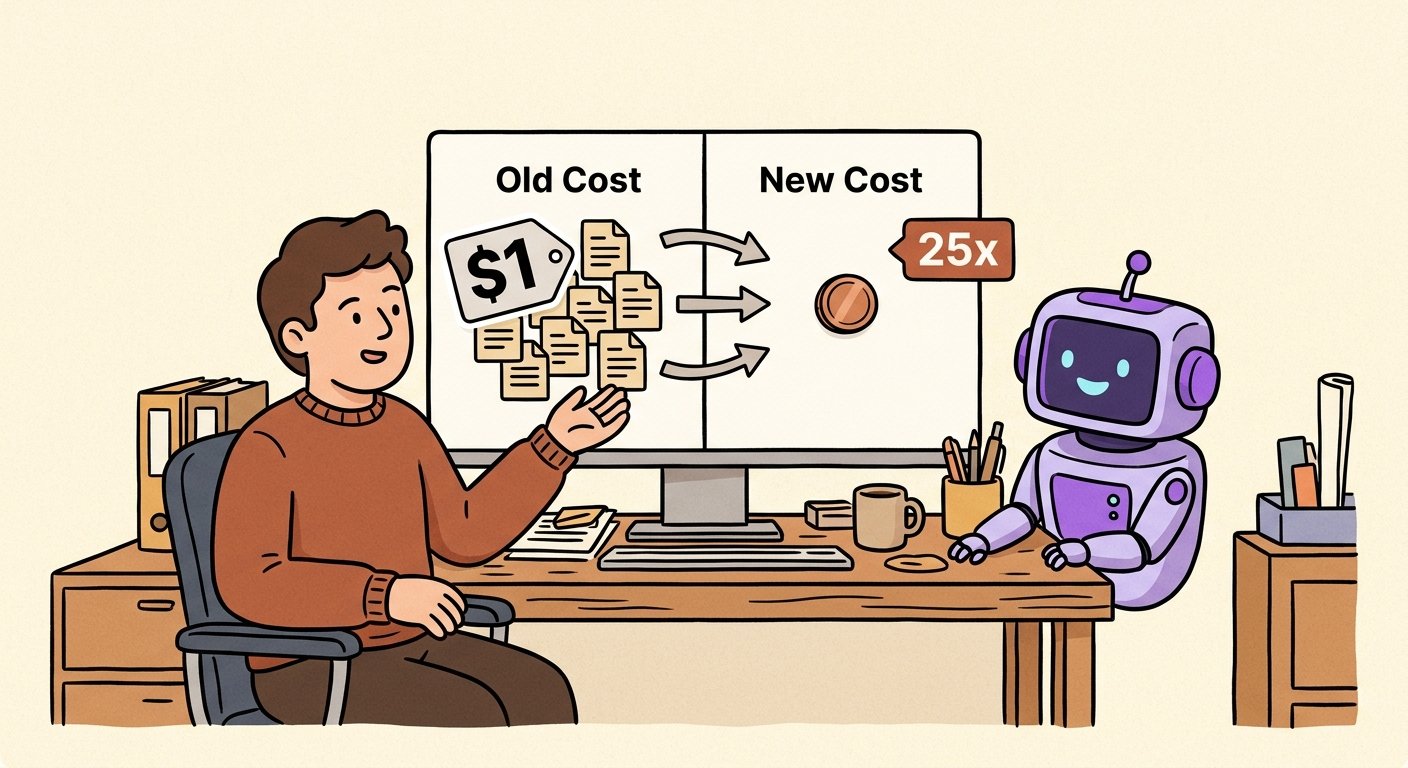
xAI just shipped a no-code Voice Agent Builder powered by Grok Voice, priced at $0.05 per minute of generated speech. For a small or mid-sized business owner who has been quoted $3,000 to $10,000 for a custom voice agent deployment, the price floor moved overnight. That does not mean every phone-tree problem just disappeared — but the math on trying one out changed a lot.
Here is the practical take: what the product actually does, where it pays off in a small business, and where it falls short.
What xAI actually shipped
The Voice Agent Builder is a no-code interface for assembling an AI agent that answers calls or makes outbound calls. The agent uses Grok Voice for the speech side, which puts the voice quality in the same neighborhood as the public Grok voice demos you have already heard — natural cadence, capable of mid-sentence interruptions, and not the clipped 2022-era TTS sound.
The "no-code" framing matters. Most voice agents a small business can buy today require either a SaaS subscription to a vendor like Vapi or Bland, or a custom build through an agency. Both routes put a markup between the customer and the underlying model. xAI's pitch — and it is a real pitch, not marketing-only — is that you can configure the agent's prompt, its tools, and its handoff rules directly, then plug it into a phone number. There is no agency in the loop.
You can find the announcement and pricing at x.ai/voice.
The cost math for a small business
$0.05 per minute of generated audio is the model cost. You still pay for telephony on top — usually another $0.01 to $0.04 per minute depending on whether you bring your own carrier or use Twilio.
Run the numbers for a realistic scenario: a 12-line landscaping company that misses roughly 40 calls a week during spring cleanup. Average call length, two minutes. If a voice agent handles every missed call and turns 60% into booked estimates, you have:
- ~16 calls answered by the agent per week
- ~32 minutes of agent speech per week
- ~$1.60 per week in model cost, plus telephony
- ~10 booked estimates per week that would otherwise have gone to voicemail
The same scenario through a traditional answering service runs $400 to $1,200 per month. The voice agent approach, even with conservative telephony costs, lands somewhere between $30 and $80 per month for the same volume. The unit economics are not close.
Where it earns its keep
Three places where this kind of tool pays for itself inside the first month for a typical SMB:
After-hours and overflow calls. Most small businesses lose revenue not because their phone system is broken, but because no one picks up between 6pm and 9am, or because two lines ring at once during a Saturday rush. A voice agent slots in here cleanly. The job is bounded: take a message, qualify the caller, book a slot, or route to a human if the caller asks for one.
Outbound appointment confirmations. "Hi, this is Sarah from Ridgeway Dental confirming your cleaning on Thursday at 2pm — can you reply YES to keep it?" Calls like this used to require a human or a third-party confirmation vendor. They are short, repetitive, and the cost of a mistake is low. Voice agents handle them well.
Lead qualification before a human picks up. "What are you calling about?" — that one question, asked well and answered well, sorts 70% of inbound sales calls into the right lane. A voice agent that knows your service catalog can do this without making the caller feel interrogated.
Where to be cautious
Three places where the tool breaks down or where small businesses should hold off:
Anything that requires empathy in a tense moment. A customer calling to complain about a billing error or a missed deadline wants a human, not a synthetic voice. Even a great voice agent will feel tone-deaf in those moments. Route them straight to a person.
Anything with a regulatory or compliance surface. Healthcare intake, legal intake, financial disclosures. The audit trail on a voice agent is workable but not free — and the cost of getting it wrong is high. Pilot on low-risk workflows first.
Anything where the phone number is your reputation. The first 10 seconds of a voice agent are judged harder than the first 10 seconds of a human. If the agent mispronounces your business name, sounds laggy, or asks the caller to repeat themselves, the caller remembers. Test the agent on your own team before it ever talks to a customer.
How to test it without buying in
If you want to feel out whether a voice agent is worth wiring into your business, the cheapest path is:
- Pick one bounded workflow — overflow calls, appointment confirmations, or after-hours coverage.
- Write the agent's script as a 200-word prompt. Include the three questions you most want answered on every call.
- Route one phone number through it for two weeks. Keep a human on standby for escalations.
- Measure call answer rate, call-to-booking rate, and customer satisfaction on the calls the agent handled.
If those numbers move in the right direction at the cost point above, you have a real ROI case. If they do not, you have lost two weeks and roughly the price of a tank of gas. That is a reasonable trade for most small businesses.
Closing thought
The $0.05 per minute price is not the story. The story is that a small business owner can now configure a production-grade voice agent in an afternoon without an agency, a developer, or a three-month implementation. Most of the practical value is going to come from the boring use cases — overflow calls, confirmations, after-hours coverage — not the flashy demo scenarios. Start there. Measure honestly. Then decide whether to expand.
Start your Nextlify trial to wire a voice agent into your operations this week.